![]()
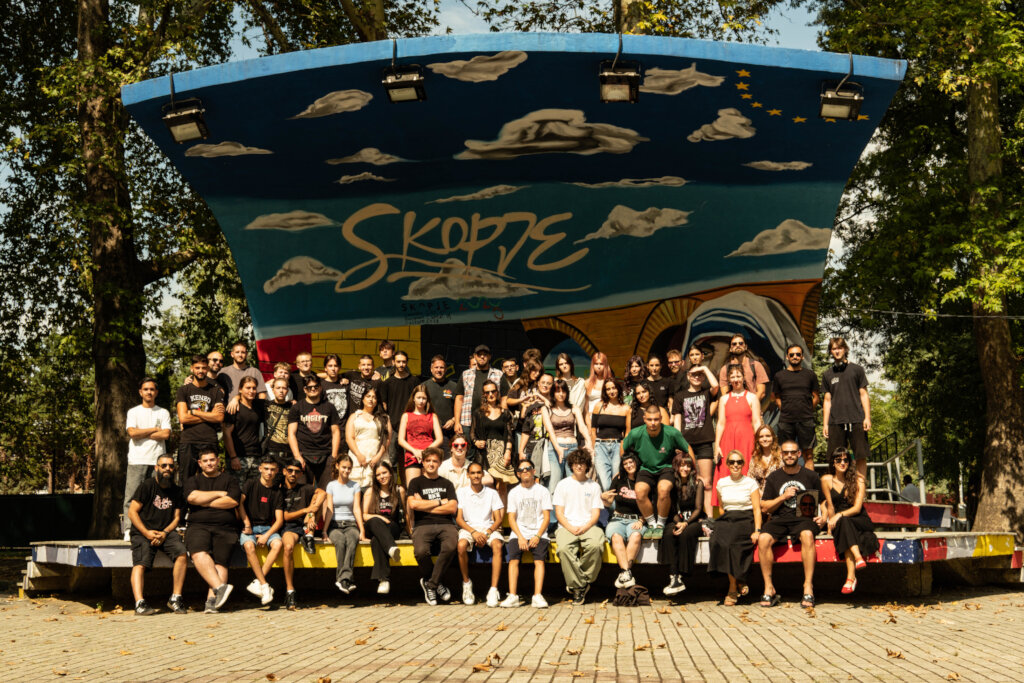
When Musicians Without Borders first organized a summer school for young musicians from a divided town in Kosovo, it was a last-ditch effort. The idea had been for a permanent rock school in the city itself, not a sleep-away camp. But years of conversations had led to nothing, the divide was too rigid and people were too scared. So this one-week summer school was meant to test the premise: could a rock music school really connect a divided generation?
Mitrovica is a city in Northern Kosovo that has been ethnically divided since the end of the Kosovo war in 1999. On the north side of town, most people are ethnically Serb and don’t recognize Kosovo’s independence from Serbia. The Albanian majority in the south answers to Kosovo’s government in Pristina. As a result of the unresolved conflict, whole generations have grown up without contact with the other community, despite living in the same city.
But histories are complex, and Mitrovica’s history had other layers. Before the Kosovo war, the industrial town had a thriving rock music culture: a culture of peer teaching, garage bands and rock music clubs. This was a culture that was shared by both communities. Yugoslavia’s pop and rock music scene represented a critical voice and shared values. During the wars that divided Yugoslavia, this voice was repressed, and Mitrovica’s rock music heritage severely damaged.
Remembering this rock music tradition, Mitrovica musicians had asked Musicians Without Borders to help rebuild the city’s music culture. The idea for a rock school was born: a place where young people would come together, learn to play instruments, and form bands, taught by the city’s celebrated musicians. But come together where, in a city so completely divided? When several attempts at launching a rock school failed, the idea was shelved. Until the summer school.
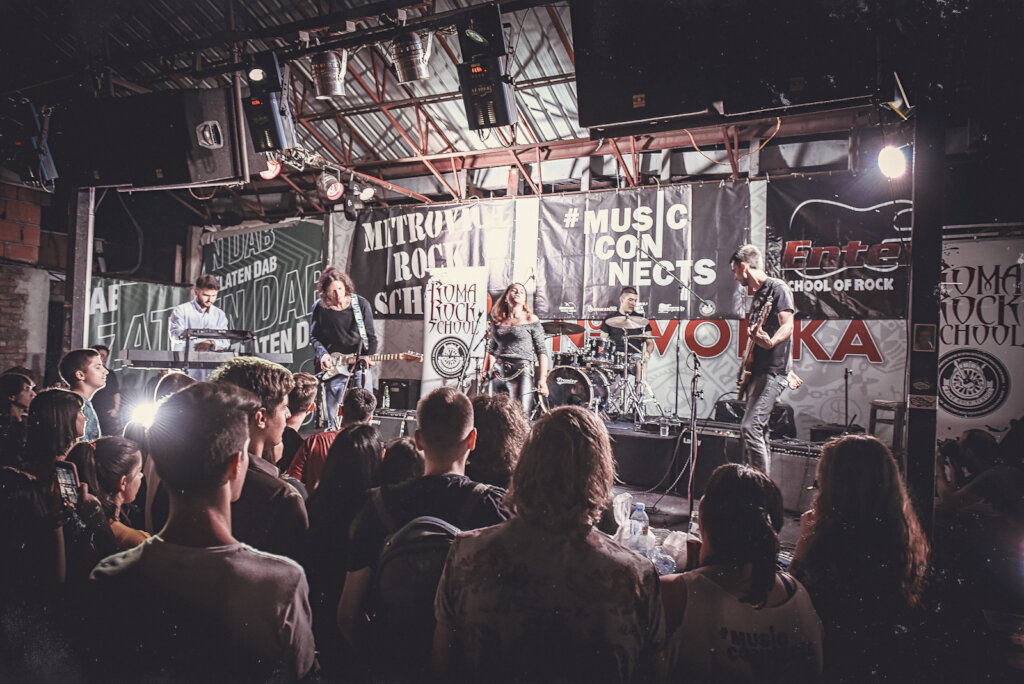
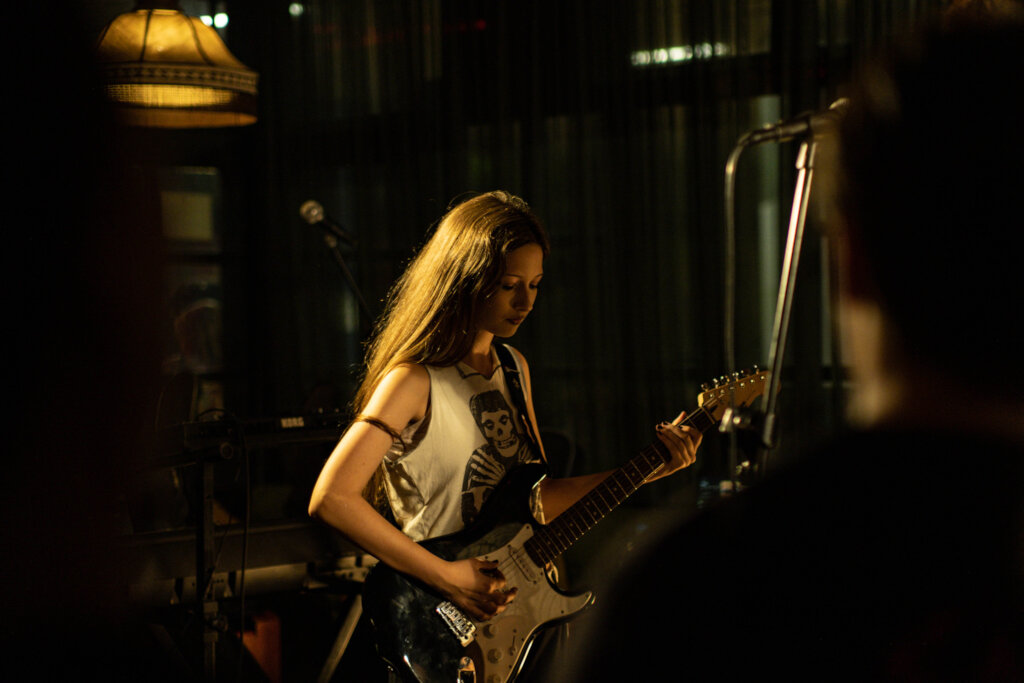
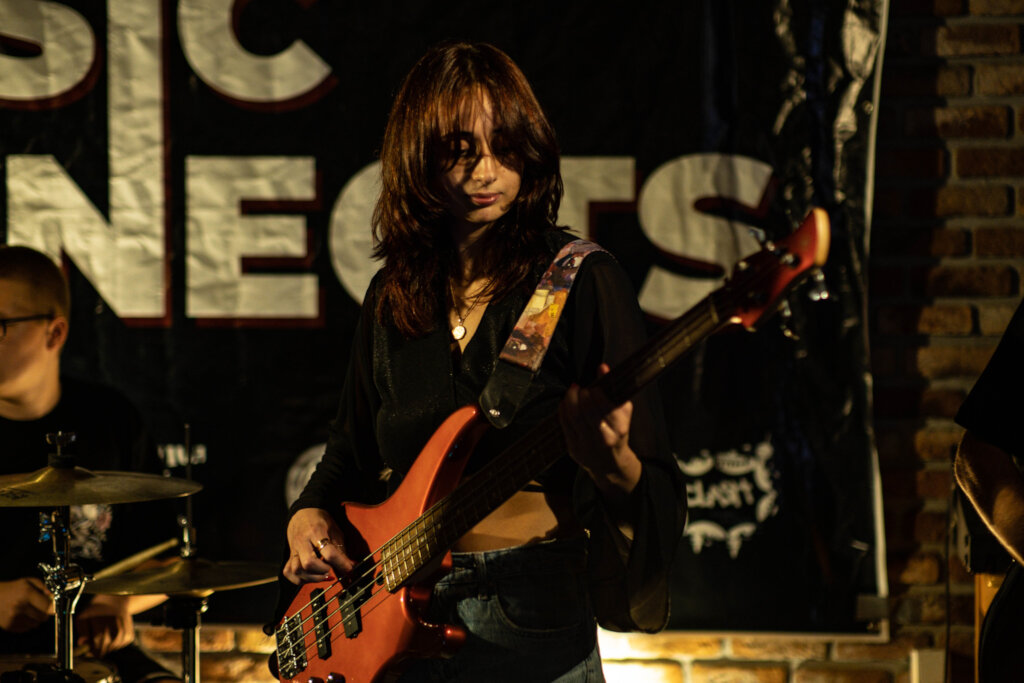
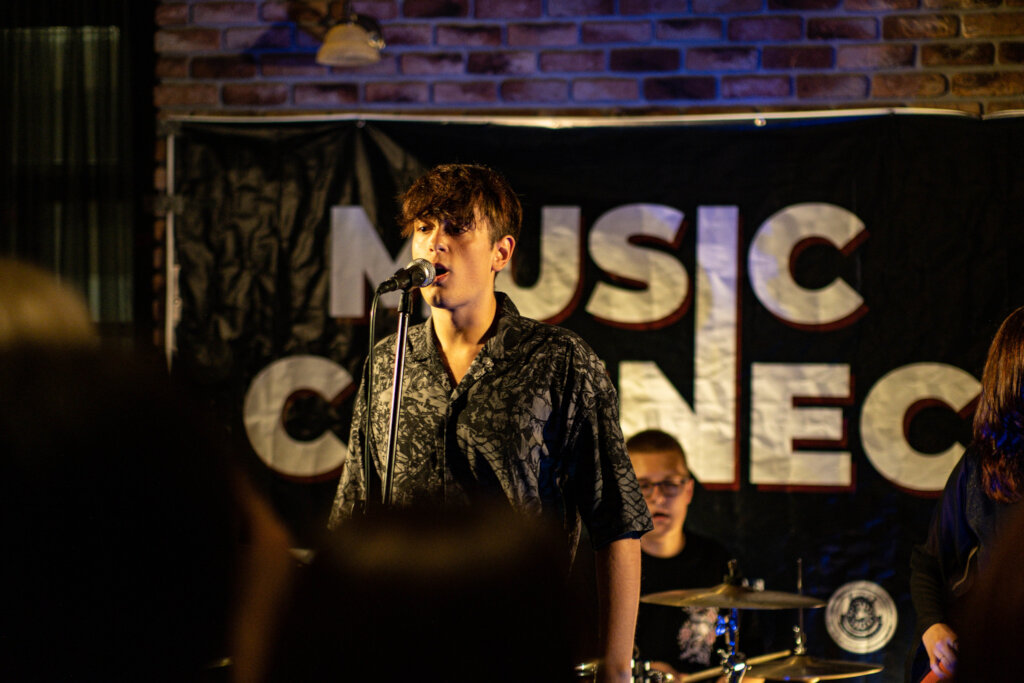
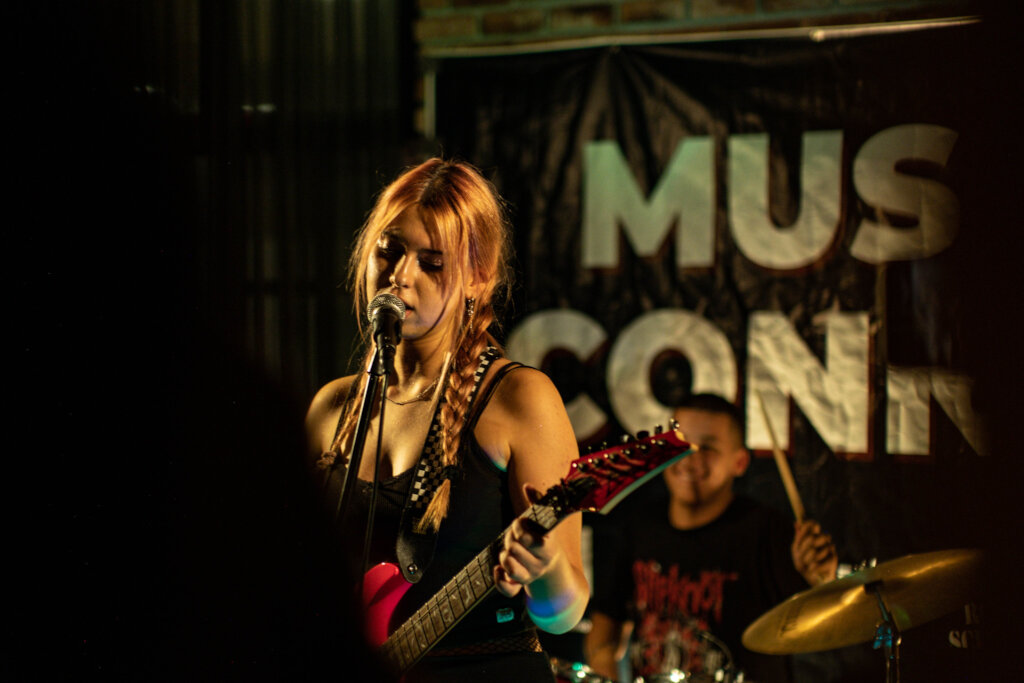
That week away in 2008 paid off. The young musicians had a great time forming bands, learning songs and performing. They enjoyed the time away from the pressure of growing up in a town defined by conflict. And they got along easily, connecting over bands they liked and riffs they were trying to learn. The group came back so energized that we felt we had no choice but to start the rock school as soon as we could. Two months later, Mitrovica Rock School opened its doors, with branches on either side of town.
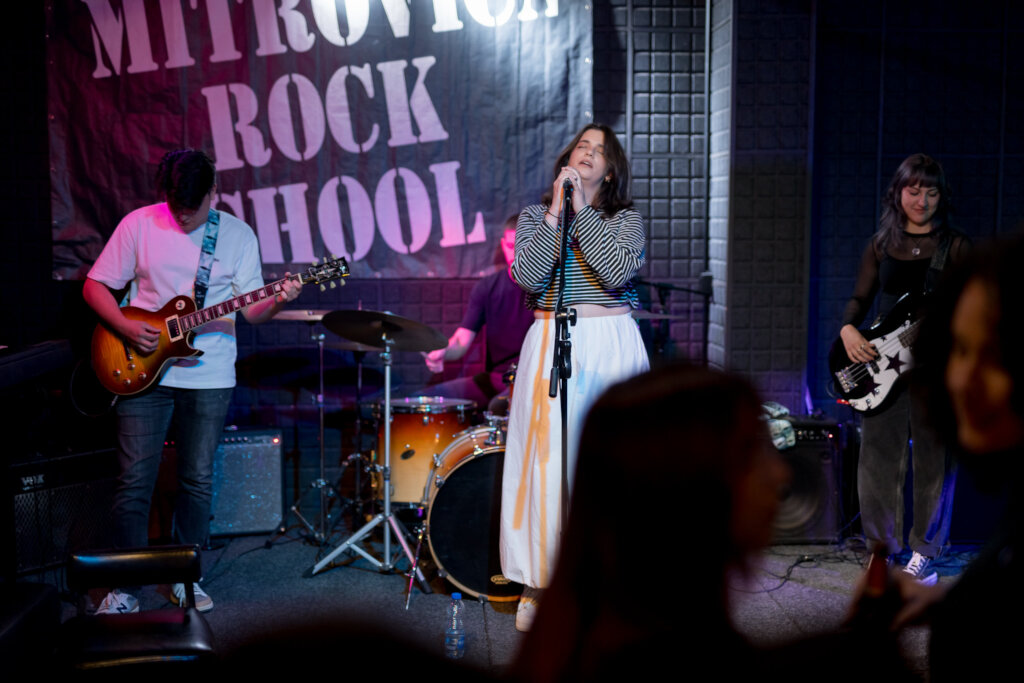
17 years later, Mitrovica Rock School has connected over 1,600 young musicians who have formed over 60 ethnically mixed bands. The school is well known for its progressive values, its unconventional approach to reconciliation, but also the quality of its education. Students go back and forth between the two branches to rehearse with their bands and attend workshops and classes with teachers from the other side. But to this day, the summer school with which it all began remains central. Why?
Researcher Dr. Gillian Howell followed the rock school program for several years, looking at the program’s mechanisms of connection and inclusion. She identified four factors: 1. The regular inclusion of unstructured, informal social time; 2. The focus on shared creative tasks; 3, The sense of being in a ‘bubble’ of safety; and 4. The underpinning values of acceptance and openness that [permeate] the program.
While we were instinctively aware that the element of fun and opportunities for social connection were crucial to the program’s success, these four factors clocked for us. The music making activities are indeed central, but without the bubble of safety, the inclusive values, and without the chance at social interaction in a natural setting, music alone wasn’t enough.
This helped us understand the central role of the summer school. Bands come together every week in Mitrovica, and the Rock School branches are experienced as safe and accepting places. Most band coaches are former participants, and skilled at making students feel valued and included. But in an ethnically divided city, young people from different backgrounds cannot come together socially in a way that feels safe and natural. To this day, going for a coffee together feels like an act of transgression, or rebellion.
“The Rock School and summer school are safe places basically for kids who want to make music. And while you’re there, with the other students, you don’t care about them in any way other than, ‘Hey, I like this person, I liked their music taste. I like how they look, how they’re dressed. They’re nice, they’re cool. I can talk with them.’ The nationality and everything is forgotten like this.”
Music Connects, yes. And we have learned how powerful music can be to bring people together. At Mitrovica Rock School, music does this literally: it brings together people from different ethnic groups who have been divided by a war. But music making, music teaching on its own, is not enough. For music to connect, we need to create, or find, environments that welcome everyone, that acknowledge and accept differences, that provide safe space for all. Mitrovica Rock School can be this, but only inside, only as a bubble. The experience at the summer school extends this feeling of safety and freedom to the outside world.
This is why every year we kick off our Rock School program with a summer school. The brilliant failure where young musicians meet, hang out, and form friendships that carry them through the year.
This report was first published on Music Teacher Magazine.
![]()
![]()
![]()
![]()
![]()
Links:
![Share on Twitter]()
![Share on Facebook]()