By Maya Gurung | Communication Manager
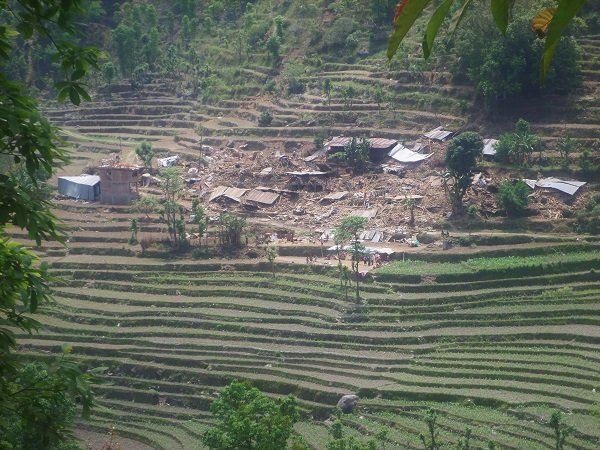
First of all, we would like to thank all donors who have contributed to our Earthquake Appeal. Thanks to your contribution, PHASE Nepal was able to reach out to the affected communities and bring relief in the first weeks after the earthquakes. Many months have passed now but recovery and rehabilitation of the affected areas will take many more years. PHASE Nepal is working in partnership with various humanitarian organizations in diverse recovery projects (reconstruction of water supply, building of temporary learning centres, sanitation ...) and has finished recently several winter preparedness programmes. Special thanks goes to Global Giving for their generous support of 50,000$ for school rebuilding in Sindhupalchowk and 26,538$ for hardship allowances for our staff, who worked tirelessly and around the clock in the months after the earthquake.
Before the earthquake, an estimated 1.2 million children in Nepal weren’t attending school. Poverty and consequent child labour, discrimination or marginalisation based on social/ethnic groups or castes, disabilities, lack of parental awareness and gender stereotypes are some of the main factors relating to why children don’t enrol in schools or drop out. The financial needs of families have risen due to losses following the earthquake, there is a high risk that even less children will attend or return to school after the disaster.
Schools play a vital role in a child’s life in establishing normal routine, helping children overcome stress and trauma and providing psychological support to better come to terms with their experiences. Schools also play an important role in educating children and the community in disaster risk preparedness and emergency response. Schools provide a safe place for children where they can play and learn in a protected environment. In a situation where people have lost their homes, income and food, school and education might not be considered a priority. Additional costs like uniforms, books and other learning supplies might seem an unnecessary burden to families from low socio-economic background and if children can’t continue their education, they often drop out permanently. Without education, children are more likely to become victims of child labour, child marriage or sexual exploitation.
During meetings with the communities in Sindhupalchowk, it was made clear that school rebuilding is a priority and PHASE Nepal has started various school rebuilding projects. Jal Devi Secondary School in Hagam, Sindhupalchowk and Seti Devi Secondary School in Thumpakhar are 2 schools for which PHASE Nepal has received approval for rebuilding from the government. For both schools, PHASE Nepal has received funds from humanitarian organizations (UNHCR for Jal Devi School and HDFA – Himalayan Development Foundation Australia – for Seti Devi School) but none of the funds are sufficient for complete rebuilding of the schools so additional funds from Global Giving will be used for this purpose. Reconstruction of both schools is planned to start in the coming month.
Another significant contribution was made by Global Giving towards the hardship allowances for staff of PHASE Nepal. In the immediate hours, days and weeks after the earthquake, staff and board members worked around the clock to bring relief and aid to the earthquake affected areas. Until now, 10 months after the earthquake, staff is putting in extra hours and often works on holidays for the recovery programmes. Often leaving worried families behind, all employees gave all their time and energy to help those in need.
Some testimonies from our staff:
Rajendra Upreti, RMC coordinator (research, monitoring and communications), tells the following: “On the day of the earthquake, we were on our way to Fulpingkot, a project area in Sindhupalchowk to have a meeting about phasing out the programmes (this was later cancelled due to the earthquake as the community will need support for many more years). When the earthquake struck, we saw big rocks falling down and realized we were standing near electricity poles so we had to find a place where we would be safe from falling stones and electricity lines. In the first minutes after the earthquake, we realized that a huge disaster had taken place and we saw all the collapsed houses and injured people. Together with Dr. Gerda, who was in our team, we immediately started to rescue people from the shattered houses and tend to the injured. We moved on to Fulpingkot where we took out medical supplies from the collapsed health post and attended to the wounded that came from all surrounding villages. We worked all through the evening and stayed the night, sleeping under the sky; the next day, we took some medicines with us and started walking down to Balefi. We kept taking care of injured persons on the way, until we ran out of medicines and we found transport to Kathmandu, where we arrived late in the evening. At home, our house was damaged and we moved into a tent for more than 1 month. My wife, who is a nurse at the army hospital where many of victims were evacuated to, worked around the clock and on Tuesday, after 1 day at home, I came back to the office, also moved into a tent, to assist with the relief work that had started at PHASE Nepal. Our 3-year-old son was left with family or neighbours. I have never thought about what I would get from PHASE for all the extra work I did. I felt it was my duty to help Nepal and the victims of the earthquake in this hour of need. It is a great symbol of appreciation though to receive the hardship allowance.”
Narayan Tondon, logistic assistant, was hired on 24th of May – almost 1 month after the earthquake – to manage the logistics for relief projects: “Since my first days at PHASE Nepal, we have worked often late hours and early mornings to arrange transport to the affected areas. Often we would feel the aftershocks and be worried about our families at home but we had no choice and had to continue to deliver aid to the badly affected project areas. As labour was scarce, we were carrying bags of rice and loading trucks ourselves. Getting food, tents and CGI-sheets (corrugated galvanised iron) had to go fast as the rainy season was coming near and villages would be cut of due to landslides. Sometimes we would confuse donors (2 big relief projects, funded by Diakonie and Caritas were running at the same time) and goods would get mixed up but in the end, we managed all well and all relief reached the right areas. Now, relief is finished and I have moved on to recovery projects. Pressure is less but still, we have to finish projects in time and due to the fuel crisis, materials were scarce so we are still facing challenges. When I look back on the relief-period, it was hard but on the other hand, I am happy that I could be part of helping out and played a role in the work that PHASE Nepal has done.”
Links:
Project reports on GlobalGiving are posted directly to globalgiving.org by Project Leaders as they are completed, generally every 3-4 months. To protect the integrity of these documents, GlobalGiving does not alter them; therefore you may find some language or formatting issues.
If you donate to this project or have donated to this project, you can receive an email when this project posts a report. You can also subscribe for reports without donating.



Support this important cause by creating a personalized fundraising page.
Start a Fundraiser