![]()
Photo: Brigette Supernova
Carlos Mejía (centre), Director of Oxfam Colombia, with Milena Caamano Campuzano at a registration table for the shelter for migrants that Fundación Mujer y Futuro helps operate outside Cúcuta. Unable to put enough food on the table, Venezuelans continue to migrate in search of a way to sustain their families. Oxfam partner Fundación Mujer y Futuro manages a women’s rights programme that provides shelter, food, cash, information about rights, and transport over a dangerous mountain range.
Your support to Oxfam Great Britain through GlobalGiving is appreciated, and we would like to express our thanks for your commitment to our shared aim to overcome the injustice of poverty.
Oxfam GB remains dedicated to tackling global poverty and inequalities. In 2022/23, we were able to increase our investment into development projects by £21.7 million, while our humanitarian spending experienced a modest decline. This shift is indicative of our increased capacity to focus on development projects in the absence of pandemic-related restrictions. To find out more, you can read our Annual Report 2022/2023.
We are pleased to share some of the initiatives that have been made possible through generous contributions from our supporters toward three priorities for Oxfam during 2022/23.
1. Rights, Resilience, and Response – our humanitarian and emergency response
Oxfam works with communities and local partner organisations in the toughest and most fragile humanitarian contexts. And while we continue our work to respond to emergencies, we believe in a world where communities don’t rely on agencies like Oxfam to simply ‘provide aid’.
Our support is therefore changing in nature. Oxfam shares power with communities and organisations, keeping them at the forefront. We continue to stand up for rights and rebuild peace and resilience, and we offer a lifesaving response when it is needed or requested. However, it is the local organisations we partner with who are central to leading change: they control the economic resources we can bring into the situation and they make decisions about the effective deployment of goods and resources.
Updates:
- The conflict in Ukraine led to the largest displacement of civilians in Europe since World War II, as millions sought refuge in Poland, Romania, and Moldova. Oxfam initiated its response in neighbouring countries in March 2022, later expanding into Ukraine. Despite lacking teams or offices in the affected regions initially, Oxfam adopted a partner-centric approach through collaborations with established organisations and local authorities, who possess a comprehensive understanding of the intricate political, cultural, and geographical nuances. Oxfam engaged with 29 local and national partners, including 10 in Ukraine, 10 in Poland, five in Moldova, and four in Romania. Notably, 49% of the funding allocated for the Ukraine response was directed to these partners, exceeding the 25% commitment outlined in the “Grand Bargain” agreement between donors and humanitarian organisations to direct funds to the grassroots.
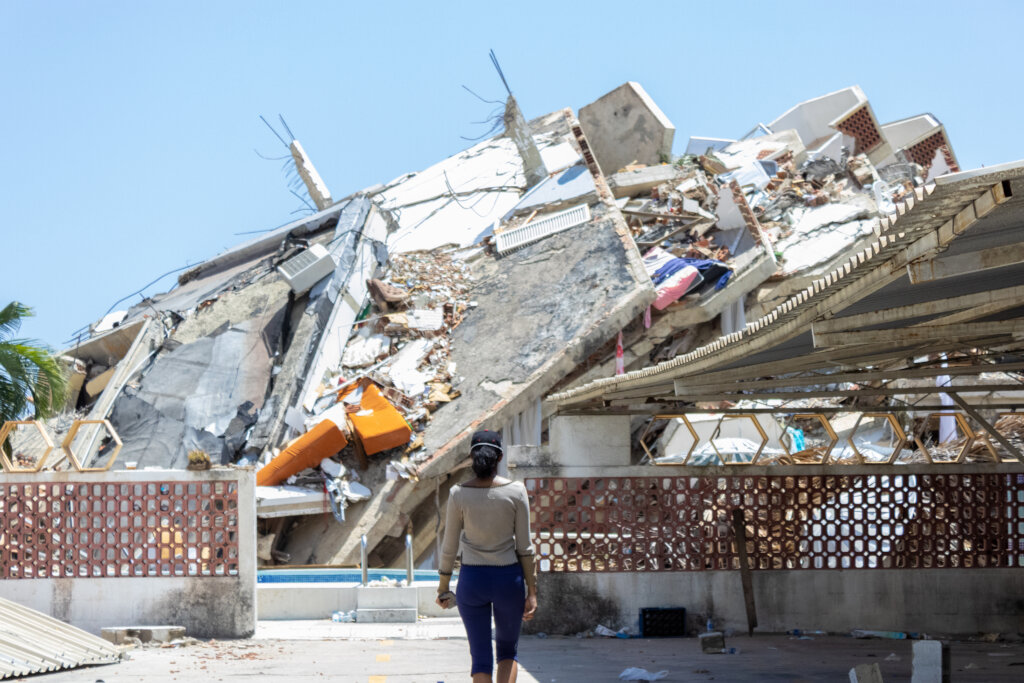
- The 2023 earthquake in Southern and central Türkiye and Northern and western Syria resulted in the loss of nearly 56,000 lives, leaving over 10 million people in urgent need of humanitarian aid. In response to this crisis, Oxfam initiated an emergency response, concentrating on essential aspects such as food, water, sanitation, health, hygiene promotion, and protection. Collaborating with local organisations and community groups, the most pressing needs were identified in the severely affected areas, leveraging existing networks and programmes. Oxfam and its partners undertook initiatives such as distributing clean water, installing latrines, providing hygiene and menstrual kits, and training volunteers to promote public health. Additionally, Oxfam also played a role in rehabilitating water tanks, digging wells, and supporting communities in enhancing solid waste treatment.
- In the Central African Republic, our initiative has played a pivotal role in empowering girls and women, fostering their ability to actively engage with decision-makers, and building their incomes through the production and sale of menstrual hygiene products. The project's remarkable success has earned recognition as a benchmark by local authorities.
2. Climate Justice – finance for people losing livelihoods from climate damage
The climate crisis has exacerbated inequalities, it is devastating people’s lives and livelihoods. Oxfam calls on the largest polluters to pay for their damaging activities to generate finance in favour of communities on the frontline of the climate crisis so that they can lead on the solutions to redress the climate damage that is affecting them.
Updates:
- Oxfam, alongside the Kenyan climate activist Elizabeth Wathuti gathered 141,000 signatures to call on world leaders at the COP27 global climate summit to set up a loss and damage fund to address the impact of climate change on people mostly affected by this crisis. The establishment of the new Loss and Damage Fund at COP27 was a huge win for the global climate movement at that summit. Oxfam continues to work for governments to pay sufficient financial contributions to the fund.
- The report “Towards a Just Energy Transition: implications for communities in low-income countries” was launched by Oxfam to exemplify the knowledge and experience of staff and partners from 13 countries where Oxfam operates. Additionally, we set up a global fund to allocate resources, encourage and document the work of country teams to achieve a just energy transition that respects the rights of affected workers and communities near vital mineral sources, whether via influencing the government or private sector, and/or by testing and scaling up community clean energy solutions.
- Oxfam conducted a trial action research initiative aimed at assisting activists and civil society organisations in Southern Africa in formulating their policy stance regarding the Loss and Damage Fund, drawing from their firsthand encounters with loss and damage. The research highlighted the significant psychological impact on affected communities dealing with the death of loved ones, the loss of land and culture, and economic setbacks like livelihood and infrastructure disruptions due to climate-related impacts. It also emphasised the difficulty of expressing these losses in a manner conducive to shaping policy solutions.
3. Valuing Women’s Work – toward an economy that works for women and carers
Oxfam recognises that economies and societies depend on unpaid care and domestic work, mostly shouldered by women. Economies and societies rely on this hard work, yet our policies and systems fail to recognise it. There will not be a more equal world without poverty until societies change perceptions of what and who are critical in the economy and economic measurement systems take them into account.
Updates
- Our investment in Kenya, Zimbabwe, and the UK to transform ingrained narratives surrounding 'women's work' in the economy has fostered collaboration among diverse groups and partners to formulate and adopt fresh messaging. Collectives of informal workers and unpaid caregivers have successfully delved into and identified deeply problematic narratives that limit women's work. This approach is proving to be a potent tool for building robust cross-care sector coalitions and fostering a shared language in the UK. Additionally, we have facilitated the coming together of funders, NGO partners, and other stakeholders to recognise how entrenched narratives contribute to the issue, particularly in failing to acknowledge unpaid care as work and to plan ways to challenge and overcome them.
- In Zimbabwe, our narrative initiatives have led to Parliament inviting us and our partners to formulate a national care policy. Oxfam and collaborating organisations initiated a petition urging the government to address Unpaid Care and Domestic Work (UCDW), emphasising the importance of valuing and recognising women's contributions. This resulted in parliamentarians introducing motions in Parliament related to UCDW issues. Through public hearings conducted by Parliament, we took the opportunity to collaborate with like-minded local organisations, bringing the experiences of women informal workers into discussions about unpaid care work. Parliament subsequently sought assistance in developing a policy specifically focused on UCDW.
- Our Enterprise Development Programme (EDP) continued to support small businesses in lower-income countries by investing money and providing loans, grants, expert advice, guidance and training. Revenues from the 20 businesses we support grew by 36% in the year. Women’s participation and leadership positions in EDP companies also increased by 28% and 13% respectively.
Thank you for your support to Oxfam Great Britain. Your contribution has enabled us to continue promoting human rights in fragile contexts, rebuilding peace and resilience when needed, promoting climate justice, and enabling the unpaid work that women undertake to be visible, recognised and valued.