By Hazel Skeet | Volunteer
A Round up of the news
Another long hot dry summer is coming to an end (we hope) and cooler months to look forward to. So what’s been happening at Sunshine Animal Refuge Agadir… keep reading to find out.
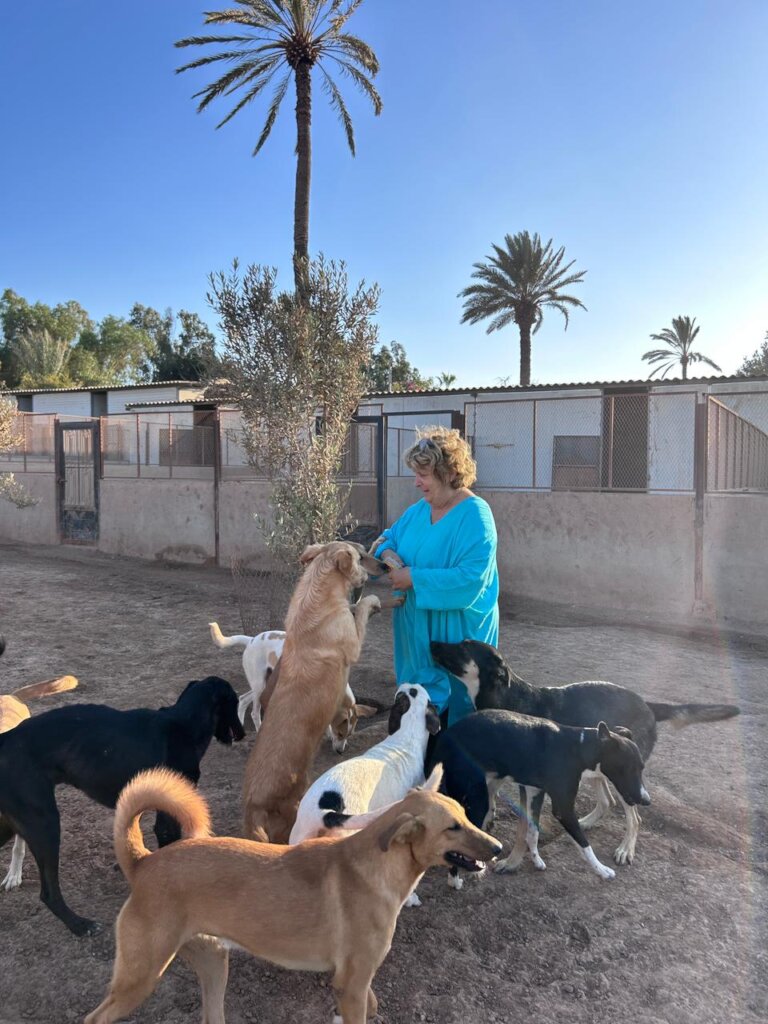
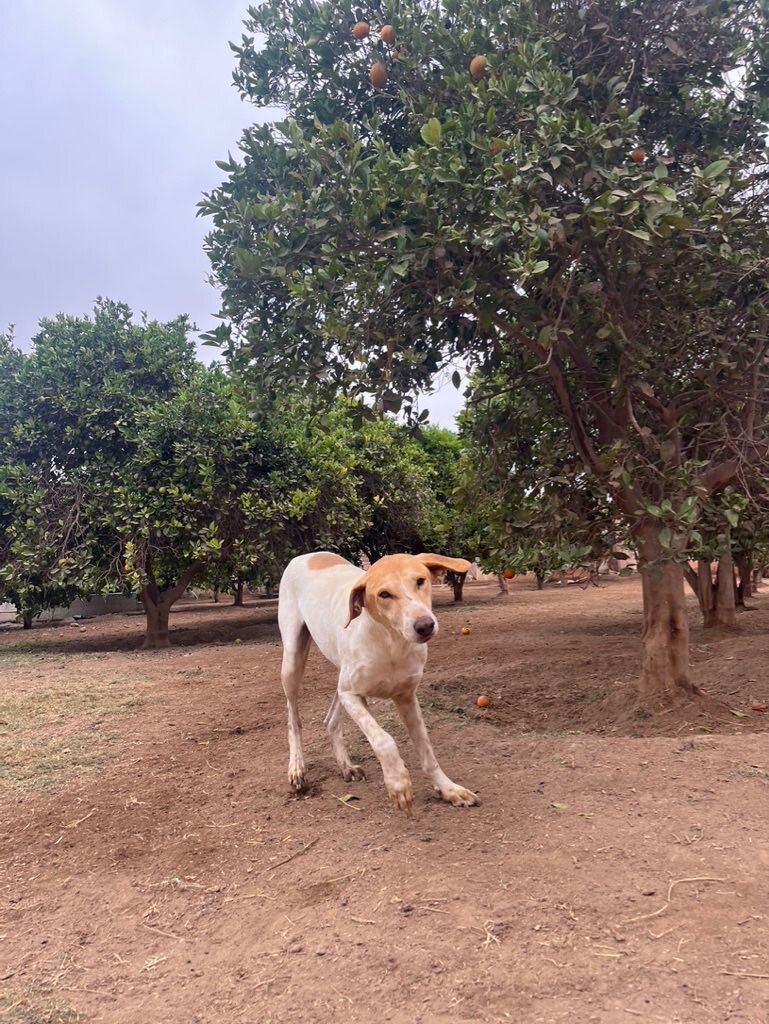
After an intensive fundraising effort our supporter Jacky raised enough money to buy some trees for the Shems Refuge. The trees provide shelter and interest for the dogs while they are in their play area and improve the environment for everyone.
We have also managed to plant some trees in the extension to the Farm Refuge but would like to plant more. Emma and Loz kindly donated a sum to help us do this in memory of their puppy Oska.
We hope to plant some more trees over the next few months and improve conditions at the Shems Refuge.
Another supporter, this time in the UK is raising funds for us via sales on Ebay. She is selling timeless, classic bags, clothing, shoes and jewellery, usually sourcing vintage fabrics of leather, wool, silk, cotton and linen. All items are posted out using recycled boxes and packaging from friends and family and using paper tape so as to keep the costs down. If you are interested you can take a look here https://charity.ebay.co.uk/charity/i/Moroccan-Animal-Welfare-Support-Souss-SCIO/299332, and splurge on some vintage items while helping us feed the animals.
Every year GlobalGiving run a fundraising day in July. For a limited time GlobalGiving match fund donations that meet their criteria until their funding pot is spent and this year we managed to raise an amazing 12 123 USD which includes 1 075 USD from GlobalGiving.
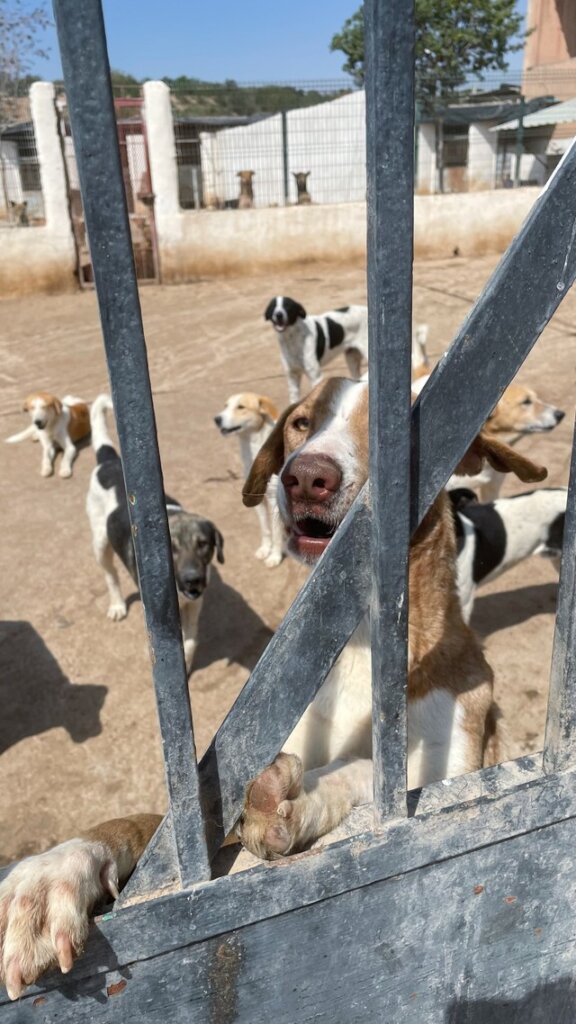
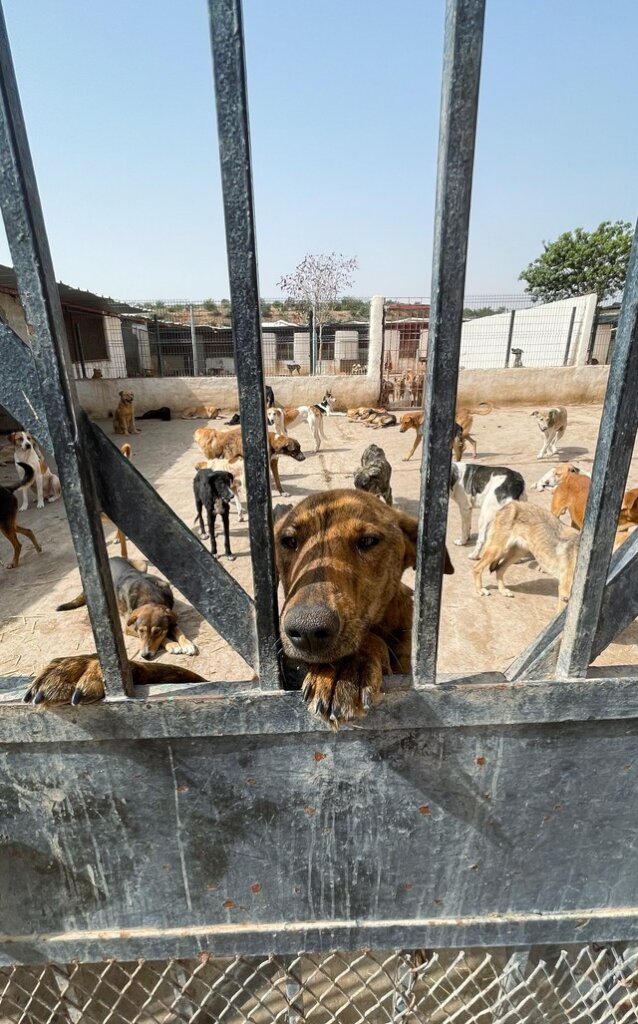
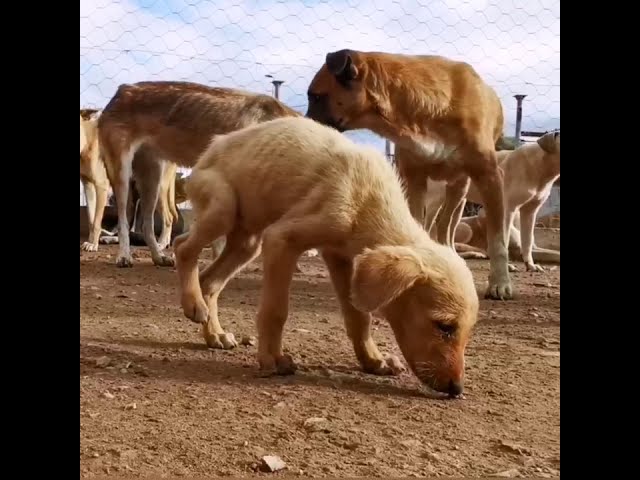
With over 900 dogs in our refuge, you can imagine that the annual booster time is a huge undertaking. It takes a lot of time and a lot of syringes of vaccine. We are very grateful to SPCA International for giving us a grant to cover the cost of revaccinating our shelter dogs.
We also want to thank supporters who donated nearly 5200 CHF from their Ski Club trip fundraiser.
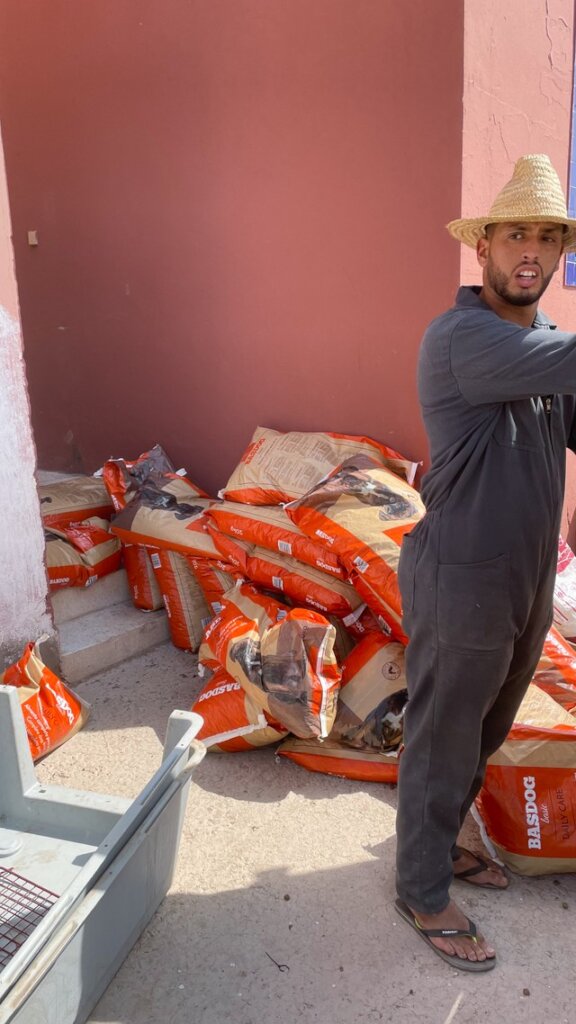
Although we are very grateful for all these fundraising activities, we are really struggling with all of our day to day running costs. Each rescue we take in means more vet bills, more food and care costs. Not a day goes by that we are not asked to help an animal in distress. Every Single Month we have to find the funds to pay vet bills, pharmacy invoices, food costs, wages. Costs are going up every month but donations are not.
We try and stay positive and not beg every day for donations, but the reality is we are going under. What we are doing is not sustainable unless we can significantly increase our income.
If you are receiving this newsletter, it means you have already supported us as a donor or a fundraiser or an adopter. We value your support for the work we are doing but we are now asking if you can give a little more, sponsor an animal, share our news with your friends, help us to keep on saving lives.
After discussions with the founders of Morocco Animal Aid we could not come to a satisfactory solution. MAA wanted us to subsidise their continued existence by taking just some of the dogs. Since they are not legal in Morocco this is not something we can do. We struggle enough to sustain our own organisation and do not have the capacity to support another one. We were prepared to help all their animals, but our offer was turned down.
Meanwhile in Agadir, all animals have now been transferred from the old dog pound to the new facility although it is not yet officially open. We are working hard behind the scenes to try and ensure that the new shelter is run in a compassionate and sustainable manner.
There has also been a lot in the press recently about proposed new legislation. Your author has not had the time herself to read the proposals, so I am not prepared to comment just now. However, we have included a piece from Dr Jamali concerning the approach that is required.
We strongly believe that the best way to make sure that the animals of Morocco are treated humanely and with regard for their lives is to work with the authorities to achieve this. It is easy to stand on the side lines, criticise and create headlines and noise. It is not so easy to actually do the work.
This month we have reproduced an article that was written by Dr Yassine Jamali for L’Economiste concerning the recently released draft animal welfare legislation. Yassine Jamali is a farmer and veterinarian (Ph. YJ)
Stray Animal Bills : We protect the population by treating dogs, not killing them
Stray dogs are back in the national spotlight, driven by a bill aimed at updating the legal framework for animal protection.
It is difficult to discuss a law whose final text has not yet been finalized, yet some of its supposed articles are already raising concern and opposition, particularly the one that criminalizes feeding or caring for a stray animal and punishes them with a fine of 1,500 to 3,000 DH.
Another penalty will be imposed on owners of unregistered animals (but to which authority should they be registered, how will they be identified?).
Other sanctions are supposed to target unauthorized or lawbreaking shelters, or people who mistreat or torture stray animals.
The Real Fuel for Canine Proliferation
We cannot discuss a text that does not yet exist. But it is possible to recall some fundamentals of public health regarding canine zoonoses and raise general questions.
Let's take the penalty for feeding or caring for a stray animal. It probably reflects a desire to make it impossible for a stray animal to have a presence in public spaces. Indeed, no food means no survival, and therefore no stray dogs in our streets and countryside.
At this point, a question arises: how many stray dogs are fed by citizens? A few thousand, tens of thousands? Fifty thousand, if we inflate the figures as much as possible. However, we have between 1.5 and 3 million stray dogs. They feed on food waste dumped into the environment every day. It is not the compassion of our fellow citizens, but their individual garbage cans and collective landfills, that are the real fuel for canine proliferation. We must also mention the animal carcasses abandoned in the countryside due to a lack of rendering services.
Who should be punished? And what would become of these thousands of tons of edible waste and hundreds of carcasses, a daily figure, if stray dogs weren't there to act as hygiene agents and compensate for our deficiencies in this area?
In short, if there were no garbage, there would be no more stray dogs.
On the other hand, if there were no stray dogs in the current situation, we would be overwhelmed with garbage along with their train of rodents and insects. Reasonable management of food waste is a necessary and probably sufficient condition for the success of the fight against canine zoonoses.
Various sanctions come second to public education
Regarding sanctions against shelters: what about the current shelters from which images of starving dogs living in their own garbage are leaking? Will they be targeted for sanctions as failing shelters? Or as places of abuse? Since the country's image is one of the objectives of the action on behalf of stray animals, one might wonder what the repercussions will be of these images of shelters flooding social media, or of a law that prohibits compassion for an animal?
Various sanctions come second to public education. Rabies and hydatid cysts, two major canine zoonoses in Morocco, are combated with handwashing, proper deworming of dogs, vaccination (social pressure on neighbors to vaccinate and deworm their dogs...), washing any bites with Marseille soap, and a minimal knowledge of the cycles and modes of contamination. All these concepts seem basic, but are they being mastered? Wouldn't the general level improve with a few basic radio or television spots? Widespread vaccination of dogs owned by owners is essential. But the numbers remain low.
If we're looking for a culprit, the dog is the ideal candidate.
For stray dogs, the option of oral vaccination has been under consideration for several months, as well as deworming using baits for stray dogs.
There is nothing to prevent the launch of a deworming campaign today on a pilot province scale and then its expansion across the country. Its cost would run into tens of millions of dirhams, a substantial sum, but it should be put into perspective compared to the cost of hydatid disease, which exceeds 2 billion dirhams per year, according to a recent study. And its implementation would pave the way for the implementation of oral vaccines. Because we protect the population by treating the dog, not by killing it. If we're looking for a culprit, the dog is the ideal candidate. If we look for solutions, it is more complicated but completely achievable
Why not the same management as other livestock diseases? Considering that rabies and hydatid cysts are public health issues, why not give them the same management as other livestock diseases, foot-and-mouth disease and sheep pox, which are subject to a health mandate executed by private veterinarians? Vaccination and deworming against the echinococcus tapeworm (responsible for hydatid cysts in humans and domestic animals) would be covered by the State, and their cost would be of the same order as the cattle, sheep, and goat vaccines administered annually by private veterinarians. This applies to dogs owned by owners.
Some Facts and Figures from SARA
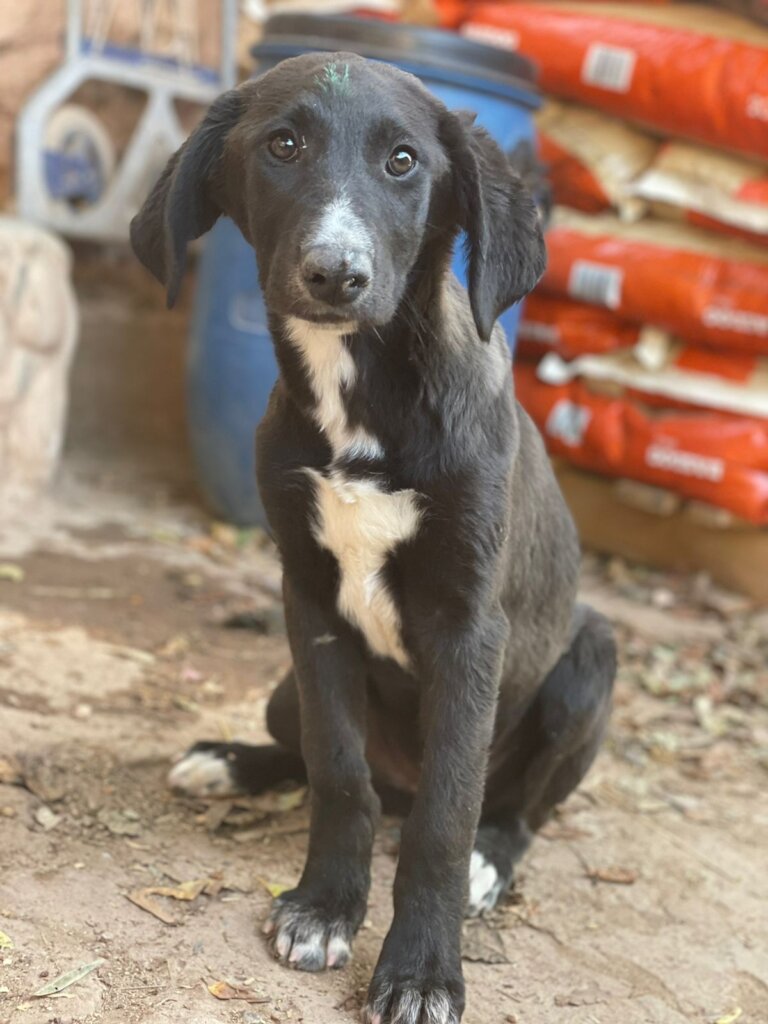
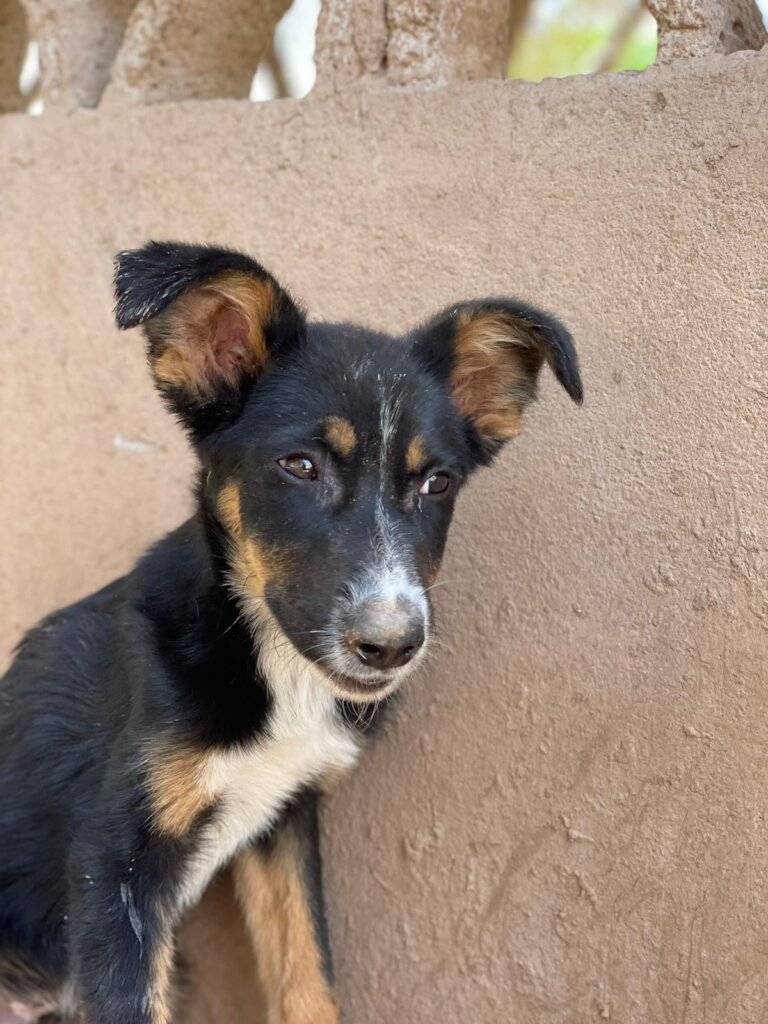
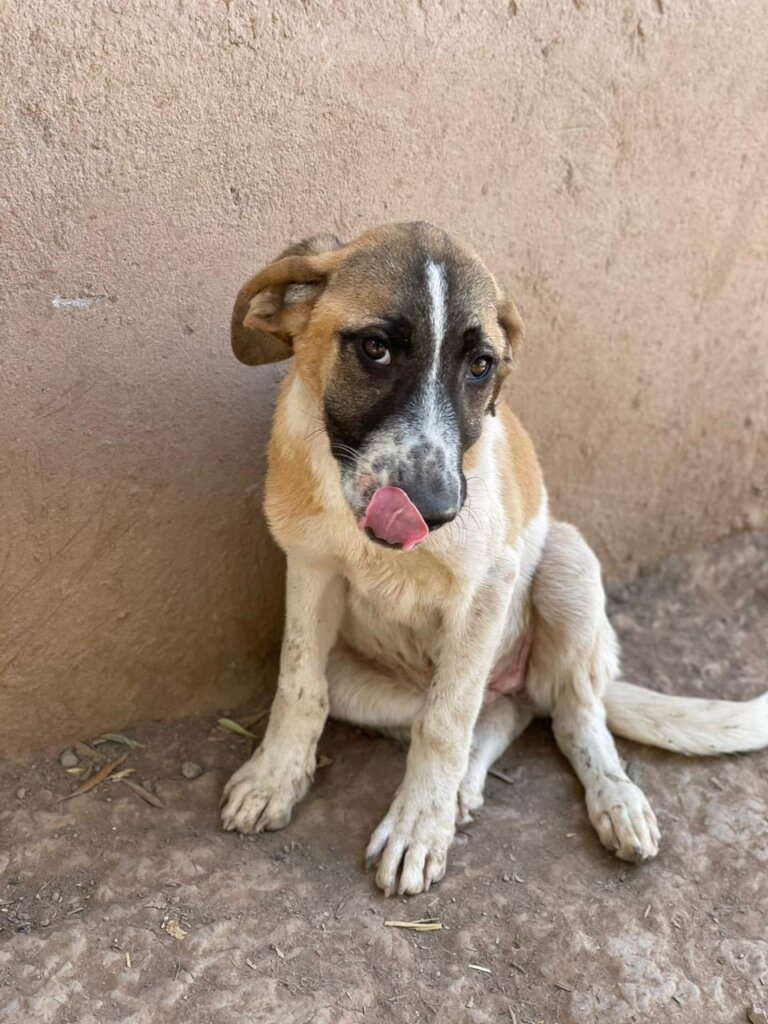
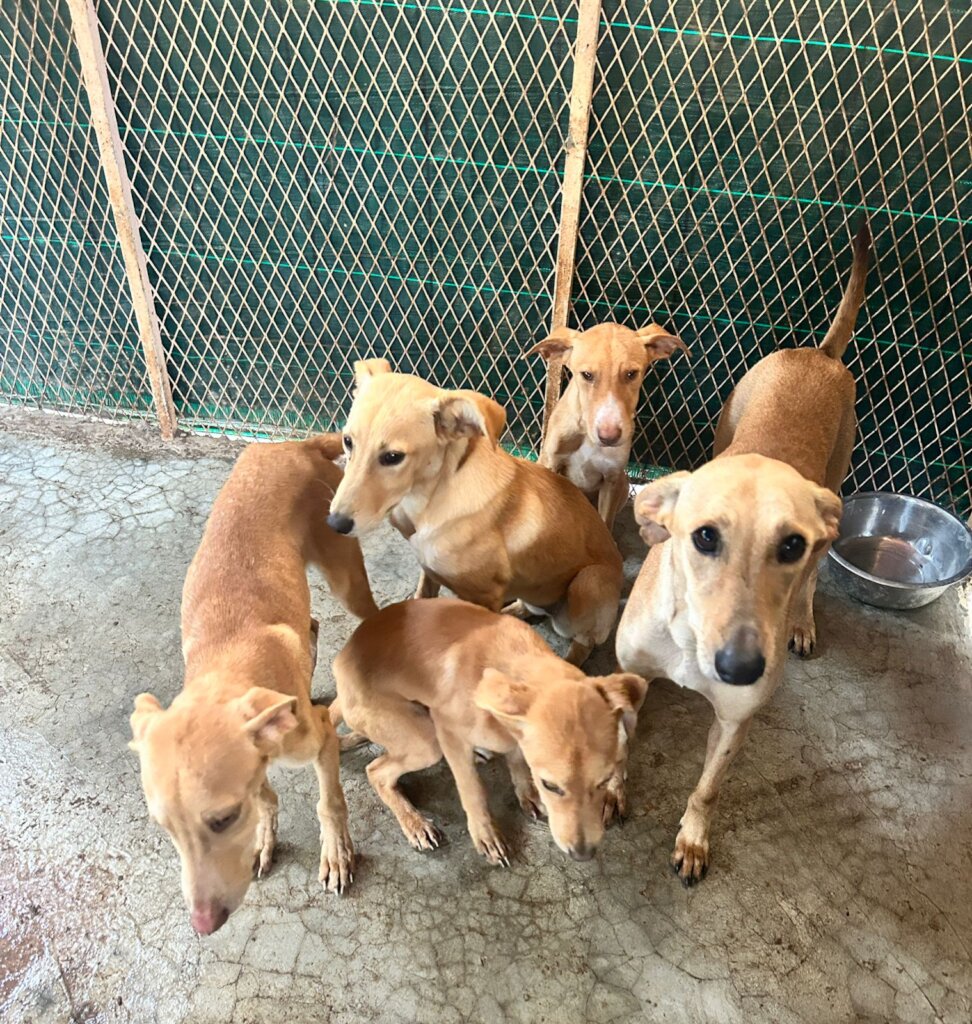
In the last 3 months we took in 68 dogs.
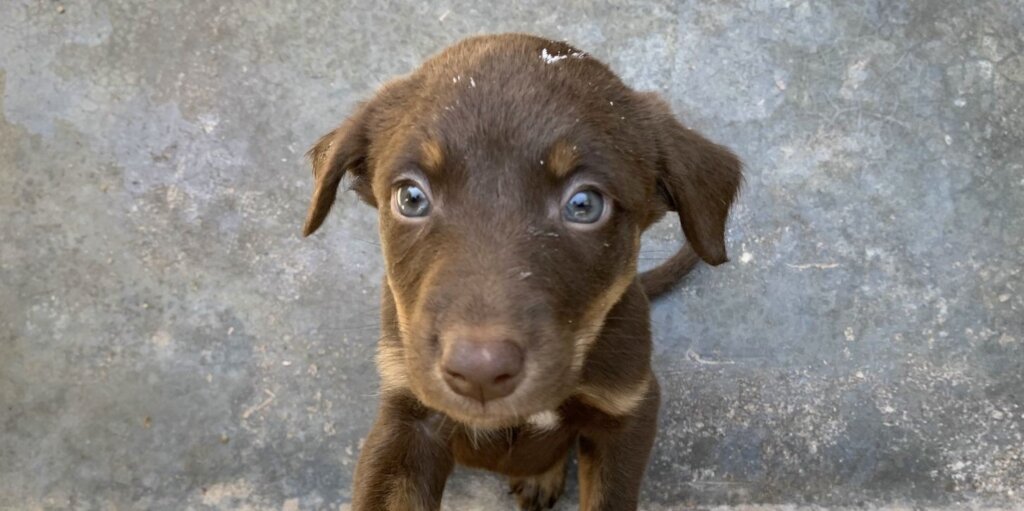
Some only stayed in the Farm Refuge for a few days as they recovered from sterilisation operations and were either returned to the street or went to our Shems Refuge. Some we took in as very young and neglected puppies and sadly some died from parvovirus. Some we took in to be prepared for travel to forever homes and some will stay with us for many, many years. All the dogs we take in need to be assessed and vaccinated, they need staff to make sure they settle in well and are happy, that they eat properly. Some of the dogs will be with us for the rest of their lives.
In this last quarter we have 34 new sponsorships
Sponsorship is a great way to help us look after all the animals at SARA. It really does make a huge difference to us knowing that each month support is incoming!
And in the three months from July to September 24 dogs and 1 cat were adopted.
In the last 3 months we have neutered 58 dogs and 203 cats. This brings our total for this year to 218 dogs and 623 cats.
As always thanks to Tierbotschafter for their steadfast support in making life better for the street dogs and cats in Agadir and around.
And that’s all the news for now. See you in January
Project reports on GlobalGiving are posted directly to globalgiving.org by Project Leaders as they are completed, generally every 3-4 months. To protect the integrity of these documents, GlobalGiving does not alter them; therefore you may find some language or formatting issues.
If you donate to this project or have donated to this project, you can receive an email when this project posts a report. You can also subscribe for reports without donating.



Support this important cause by creating a personalized fundraising page.
Start a Fundraiser