By Carmen S. Apuli | Resource Mobilization Coordinator
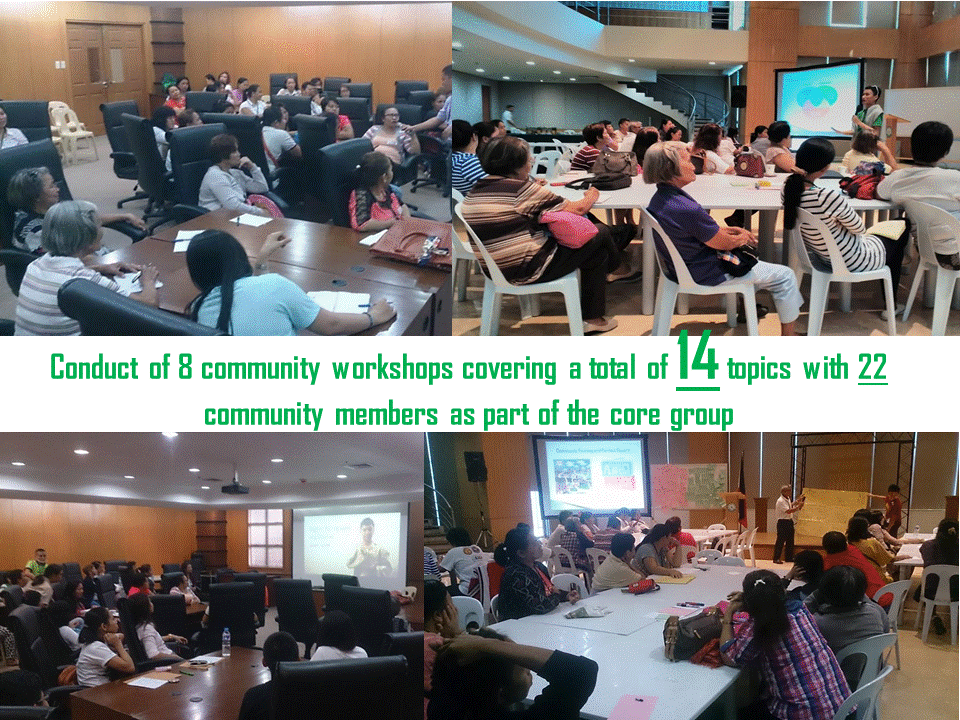
DLSU’s Center for Social Concern and Action continue the series of workshop both for community members and key student “Champions “ on social entrepreneurship as avenue to support social enterprises in partner urban poor communities and in building capacities of promising urban poor women and out-of-school youth on social entrepreneurship (SE) and enabling communities to develop SEs.
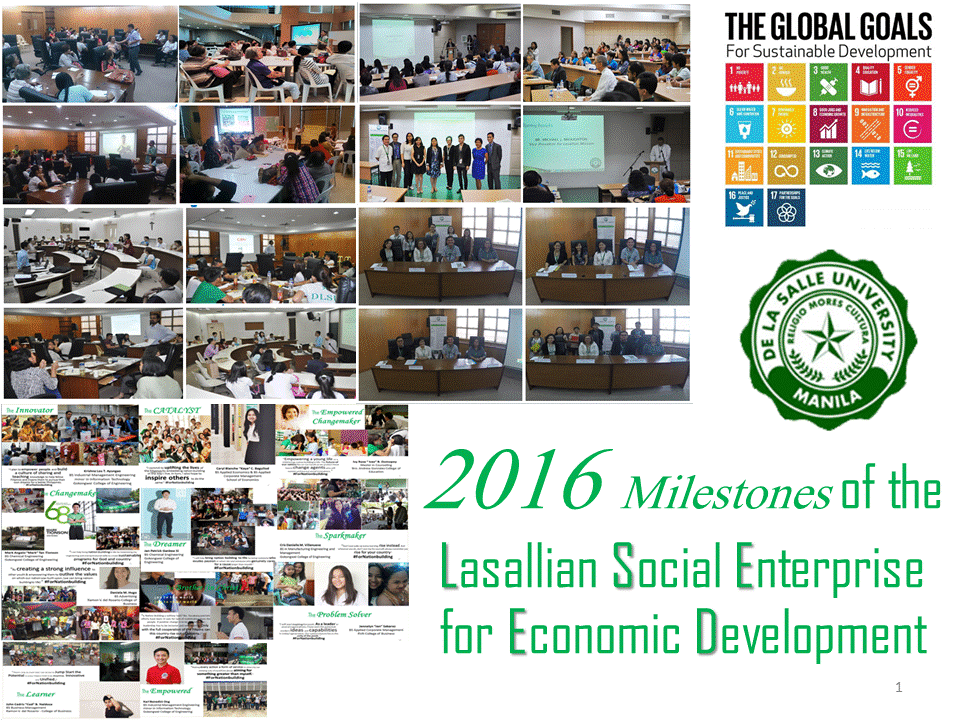
Discussions with community members were facilitated by COSCA’s Development Specialist for LSEED last October 13 and 28, 2016 primarilly to provide the participants a briefer of the micro small and medium enterprises (MSMEs) in the Philippines. During the workshop, community members were grouped into clusters ( Achievement Cluster to discuss topics on Opportunity Seeking, Persistence, Commitment to Work, Risk Taking, Demand for Quality and Efficiency, the Planning Cluster to tackle Goal Setting, Information Seeking, Systematic Planning and Monitoring, and the Power Cluster to discuss Persuasion and Self-Confidence) to better appreciate the Personal Entrepreneurial Characteristics of Social Entrepreneurs (SEs).
Following were the highlights of the workshop: One team understood the instructions clearly, and was able to come up with the right strategies. The aggressiveness of the team enabled them to produce the most number of products and earn the highest number of sales. The team highlighted the importance of maximizing bank accessibility to secure their money as well as the value of producing quality products / services. Another team displayed inability to take the risk of buying raw materials to produce products, which resulted to the very low production output and sales outcome. The third group showed one important strength, the quality of the product they produced enabled them to sell at a very competitive price. The team however acknowledged that the team was not able to get the instructions correctly hence, they spent their ‘money’ on unnecessary things during the start of the simulation activity. One group failed to come up with the strategies correctly, experienced difficulty during their planning activity and was unable to take and manage the risks as entrepreneurs.
The workshop conducted on October 28, 2016 introduced the women community members (a number of LSEED student fellows attended as participant-observers) basically to two concepts: 1) Social Entrepreneurship in the Philippines and Characteristics of SEs, and 2) Responding to Relevant Community Problem/s and creating the SE idea, establishing partners and developing the SE idea.
The learning sessions which include the series of workshop conducted on October 13 and 28 inspired a number of student fellows to share the advocacy of advancing SE.
By Maria Carmen S. Apuli | Resource Mobilization Coordinator
Project reports on GlobalGiving are posted directly to globalgiving.org by Project Leaders as they are completed, generally every 3-4 months. To protect the integrity of these documents, GlobalGiving does not alter them; therefore you may find some language or formatting issues.
If you donate to this project or have donated to this project, you can receive an email when this project posts a report. You can also subscribe for reports without donating.



Support this important cause by creating a personalized fundraising page.
Start a Fundraiser