By Ranna Khalil | Researcher
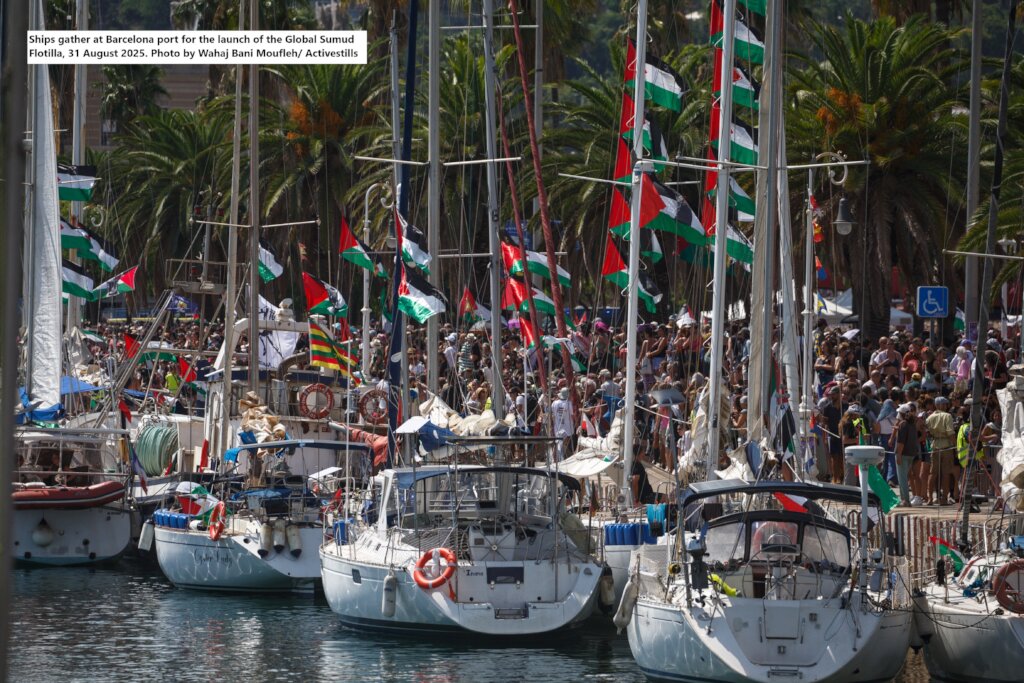
Just days before a fragile ceasefire, Israel unlawfully intercepted four humanitarian missions in international waters attempting to break the blockade on Gaza: The Global Sumud Flotilla and Omar Al-Mukhtar ship (1–2 October), the Conscience ship, and the Thousands Madleens Flotilla (8 October). These missions aimed to deliver urgently needed aid to Gaza and raise global awareness of the genocide. The flotillas included around 50 vessels and more than 600 participants from around the world.
Nearly two decades into Israel’s blockade, and as a result of its genocide, Gaza remains under a devastating siege that has crippled all aspects of life. Residents face severe shortages of food, water, fuel, and medical supplies, with hospitals near collapse and many people live without shelter. The intercepted flotillas represented a vital attempt to respond to this crisis and challenge the continued isolation and collective punishment of Gaza’s population.
Following the ships' interception, Israeli authorities subjected the participants to harsh treatment and severely restricted their access to legal counsel. Despite these obstacles, Adalah staff, together with volunteer lawyers, acted swiftly to defend participants’ rights, ensure their safety, and demand their immediate release and safe return home.
_____________________________________________________
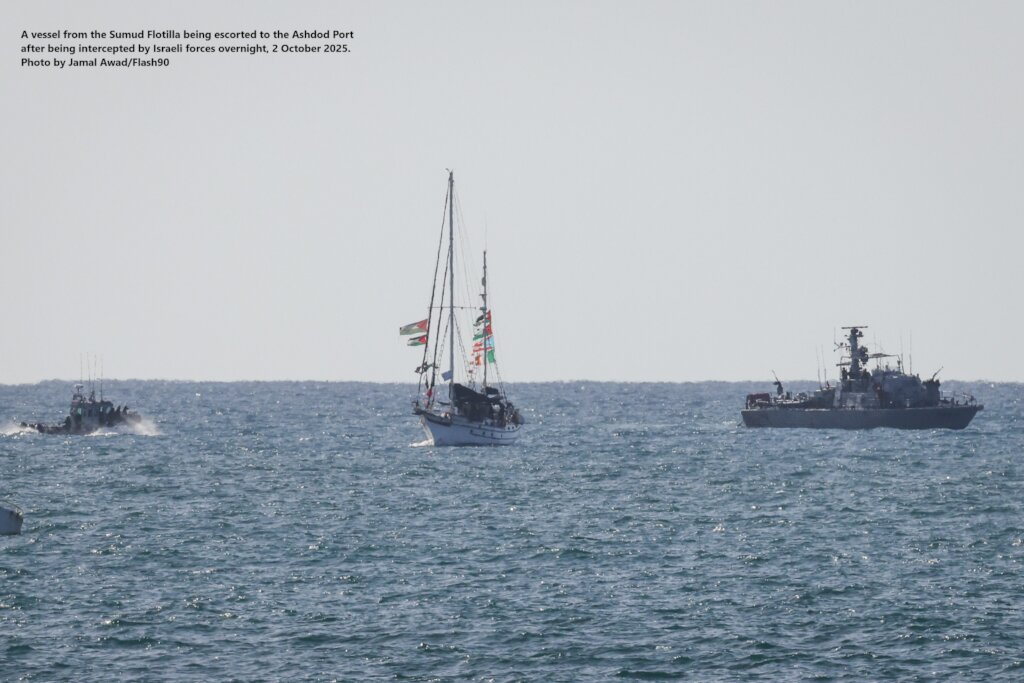
The Israeli navy intercepted all flotilla vessels in international waters, a flagrant violation of international law. Activists reported being attacked by drones, Israeli forces and helicopters before their ships were seized and towed to Ashdod Port. The authorities transferred most participants to Ktzi’ot Prison, located in Israel’s far south in the Naqab (Negev), a facility known for its harsh conditions. The police arrested three participants with Israeli citizenship and interrogated them under charges of “infiltrating a closed military area.” They were eventually released after three court hearings and further easing of restrictions, following their refusal to sign onto onerous conditions of release.
Despite Adalah’s prior notification to the Israeli authorities that we would represent the detainees, they denied or severely limited some participants’ access to legal counsel. After repeated interventions, Adalah lawyers did provide legal consultations to almost 500 participants and attended emergency detention hearings at Ashdod Port, and before the Detention Review Tribunal at Ktzi’ot Prison, and the Ashkelon Magistrate’s Court. Adalah argued, among other points, that Israel’s blockade on Gaza is illegal; that the interception of the vessels and the detention of the activists were unlawful; and that the delivery of humanitarian aid to Gaza residents by international organizations is legal, according to the International Court of Justice’s decision in the case of South Africa v. Israel. Adalah further argued that this action does not constitute illegal entry into Israel, as Gaza is not part of Israel. On this basis, Adalah’s lawyers requested the immediate release of all activists and demanded that they be allowed to return to their vessels to deliver the humanitarian aid to Gaza.
Some participants reported that Israeli forces, including prison guards, subjected them to violence, humiliation, and degrading treatment, including denial of food, water, and essential medication, even for life-threatening conditions such as high blood pressure, heart disease, and cancer. Many activists testified that they were handcuffed, blindfolded, and forced into painful positions for hours. Women and Arab participants contended that they faced discriminatory and abusive treatment.
Israeli National Security Minister Itamar Ben-Gvir, appearing at Ashdod Port during the detentions, publicly praised the mistreatment of activists and called them “terror supporters.” Adalah condemned these statements as open endorsement of state-sanctioned abuse and dehumanization.
By 12 October, the authorities released all participants aboard the Conscience and Omar Al-Mukhtar ships and the Sumud and Thousands Madleens flotillas and/or deported them to their home countries.
Learn more about Adalahs' representation of the flotilla participants
These incidents mark a significant escalation in the Israeli authorities abuse and mistreatment of humanitarian activists compared to earlier flotilla missions in June and July 2025, including the Madleen and Handala vessels. The intensified repression demonstrates Israel’s clear intent to deter future flotillas.
Adalah, together with volunteer attorneys, worked around the clock to demand the safety and immediate release of all participants in the six missions launched this year and to secure full access to legal counsel. Throughout this period, Adalah maintained close contact with embassies and consulates regarding the situation of the activists and responded to hundreds of inquiries from family members, international coalitions and media outlets. Adalah’s representation of the flotilla participants received widespread international media attention.
Media highlights include:
Adalah continues to assist the Freedom Flotilla participants. On 12 October 2025, Adalah asked the Haifa Maritime Court to reject the state’s demands to seize the Madleen and Handala ships (intercepted in June and July 2025), citing lack of legal authority.
Project reports on GlobalGiving are posted directly to globalgiving.org by Project Leaders as they are completed, generally every 3-4 months. To protect the integrity of these documents, GlobalGiving does not alter them; therefore you may find some language or formatting issues.
If you donate to this project or have donated to this project, you can receive an email when this project posts a report. You can also subscribe for reports without donating.



Support this important cause by creating a personalized fundraising page.
Start a Fundraiser