By Purwanto | Project Staff
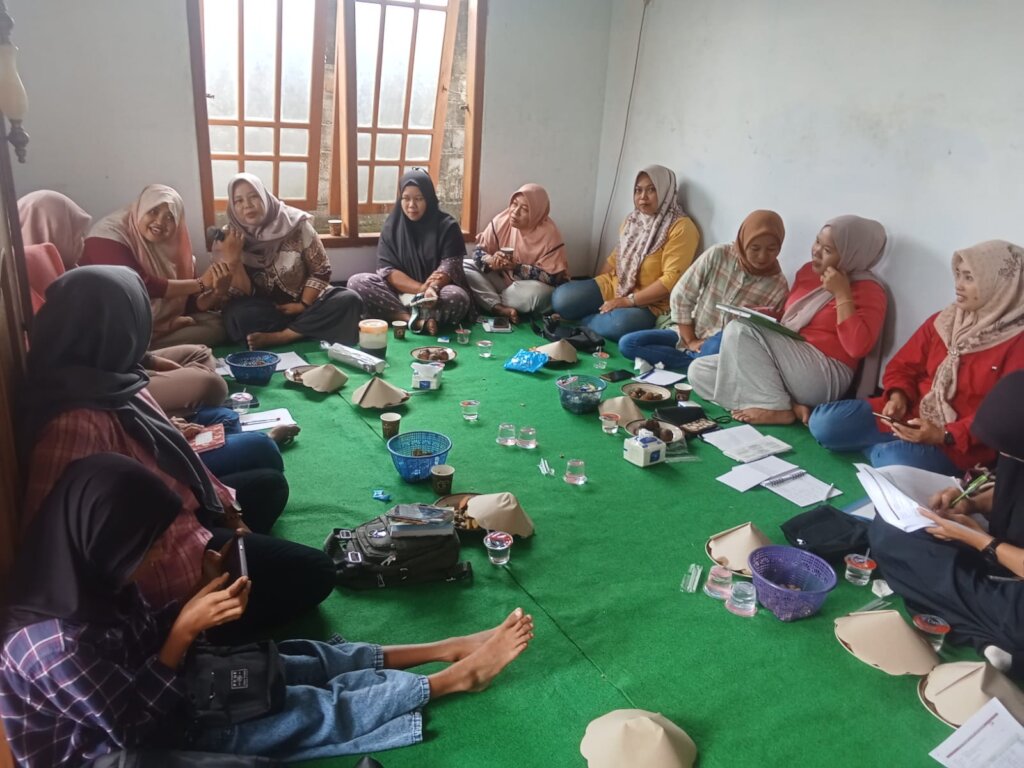
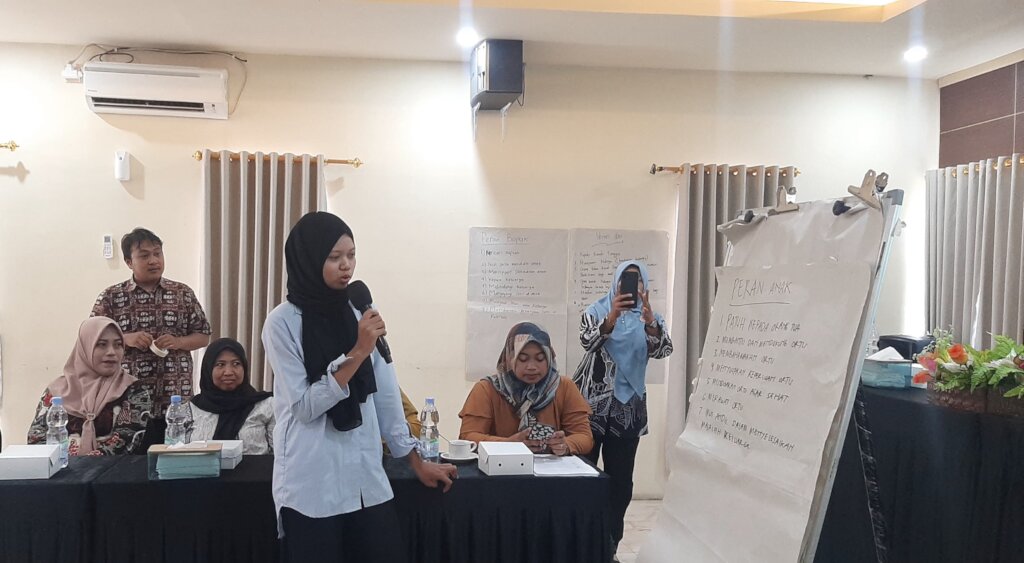
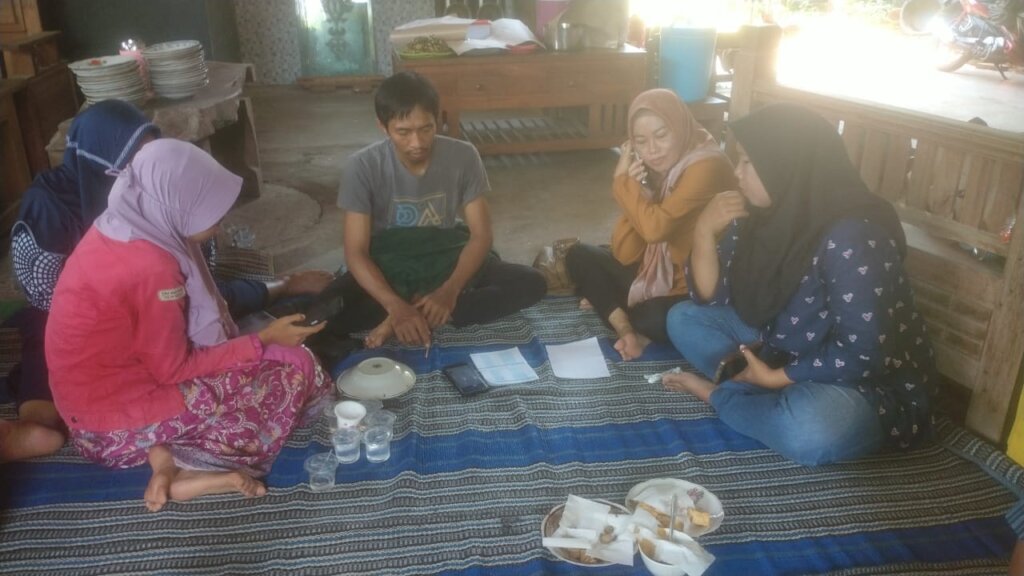
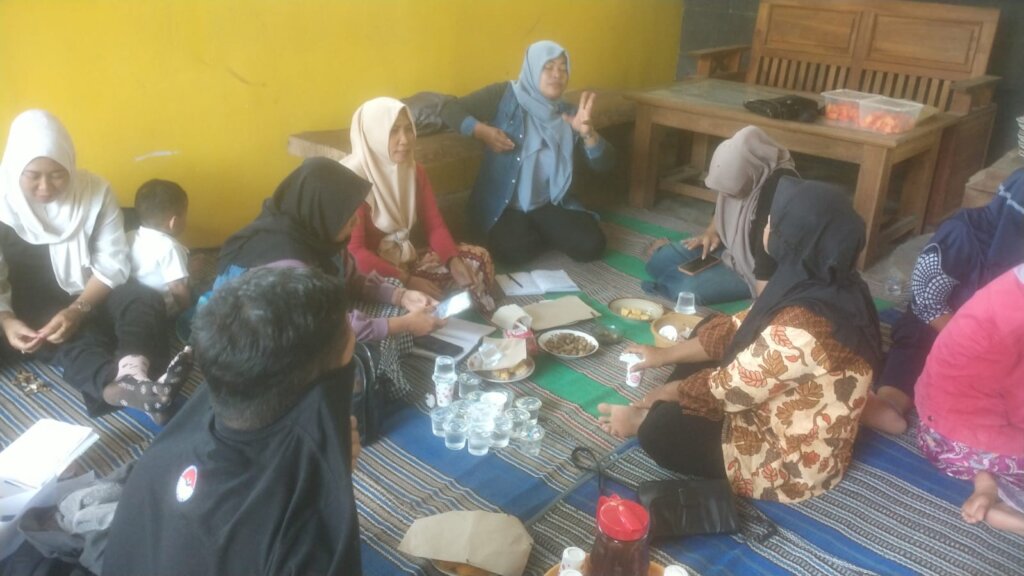
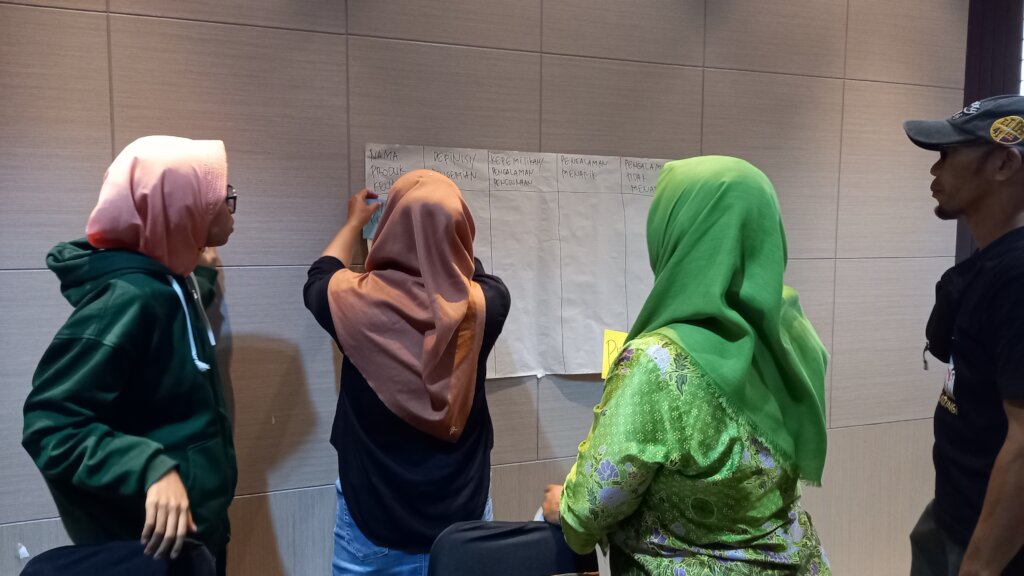
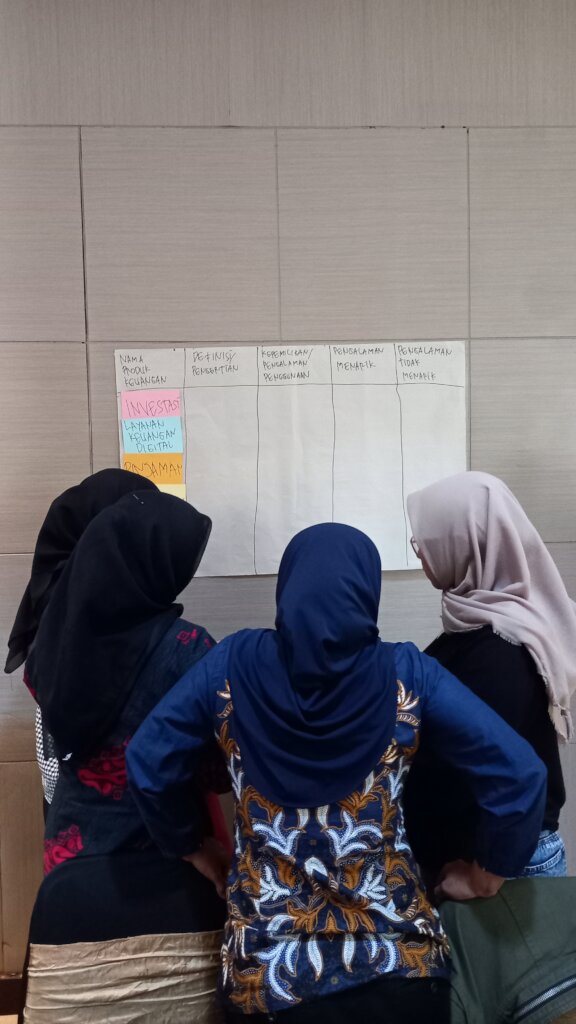
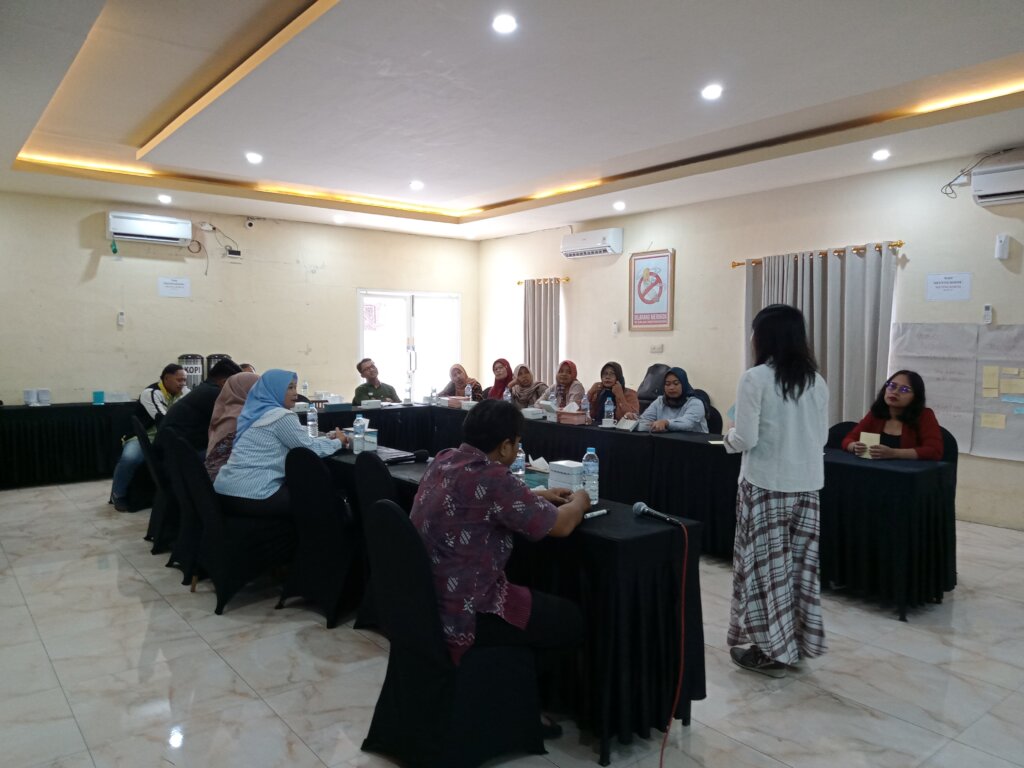
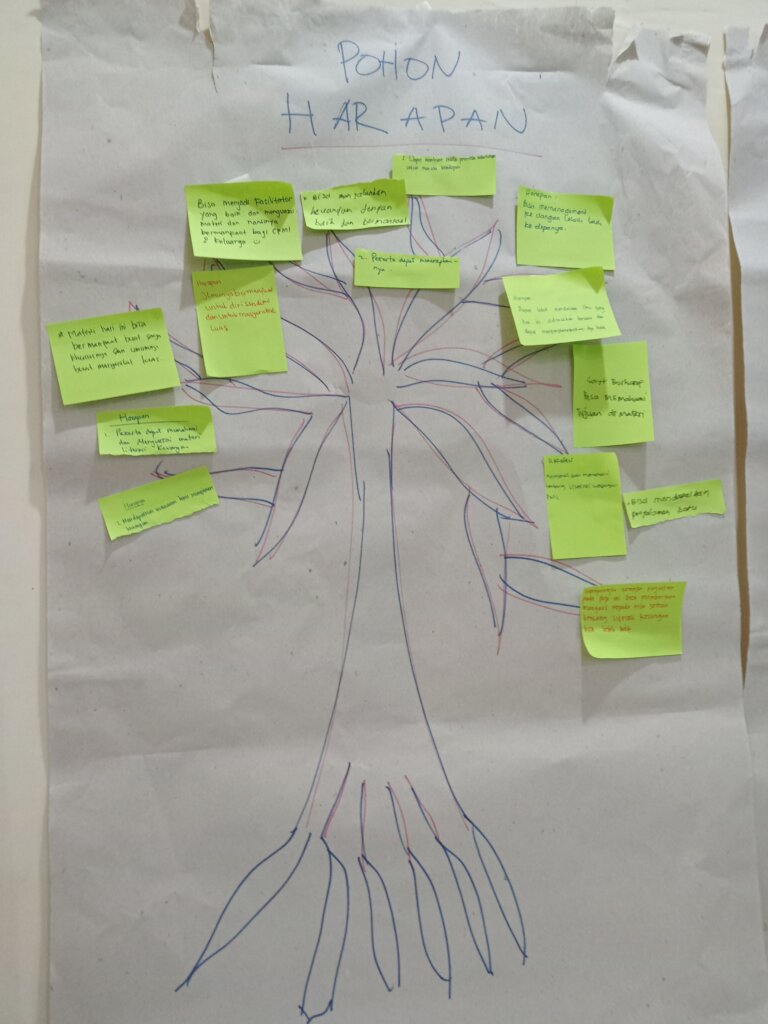
On Saturday, November 8, 2025, INFEST Yogyakarta facilitated a Learning Reflection Discussion on the Economic Empowerment of Migrant Worker Communities in Jatinom Village, Kanigoro District, Blitar Regency. The activity formed part of the Regular Business Meeting (Activity 1.2.8 – OP-2.4.2) and aimed to review community-based economic initiatives implemented throughout 2025 while preparing business development plans for 2026.
The meeting was attended by 32 participants (11 men and 22 women), consisting of administrators of the Indonesian Migrant Worker Community (Komunitas Pekerja Migran Indonesia/KOPI) and community business units (BUMKOPI) from five assisted villages—Gogodeso, Pandanarum, Jatinom, Lorejo, and Sumberagung—as well as representatives from KOPI Blitar Regency and the Migrant Worker Cooperative. The discussion was facilitated by Purwanto, INFEST’s Project Officer for Blitar, with support from AWO International.
Objectives and Focus of the Discussion
The reflection forum was designed to:
Key Reflections and Learning Outcomes
Throughout the session, each village KOPI presented an overview of its economic initiatives, ranging from community shops and savings groups to home-based production enterprises. Discussions highlighted that while some initiatives showed promising progress, others stagnated or incurred financial losses due to weak planning, limited marketing capacity, and low member participation.
Participants emphasized that community businesses are not solely measured by profit, but also by the learning process, trust-building among members, and collective ownership. Several common issues emerged, including inadequate financial record-keeping, limited business planning skills, and the absence of clear long-term strategies.
Representatives from KOPI Blitar Regency underlined the importance of cross-learning among villages, noting that peer-to-peer sharing helped communities identify practical solutions and avoid repeating similar mistakes. Support from village governments was also highlighted as a crucial factor in strengthening institutional sustainability.
Looking Ahead: Business Development Plans for 2026
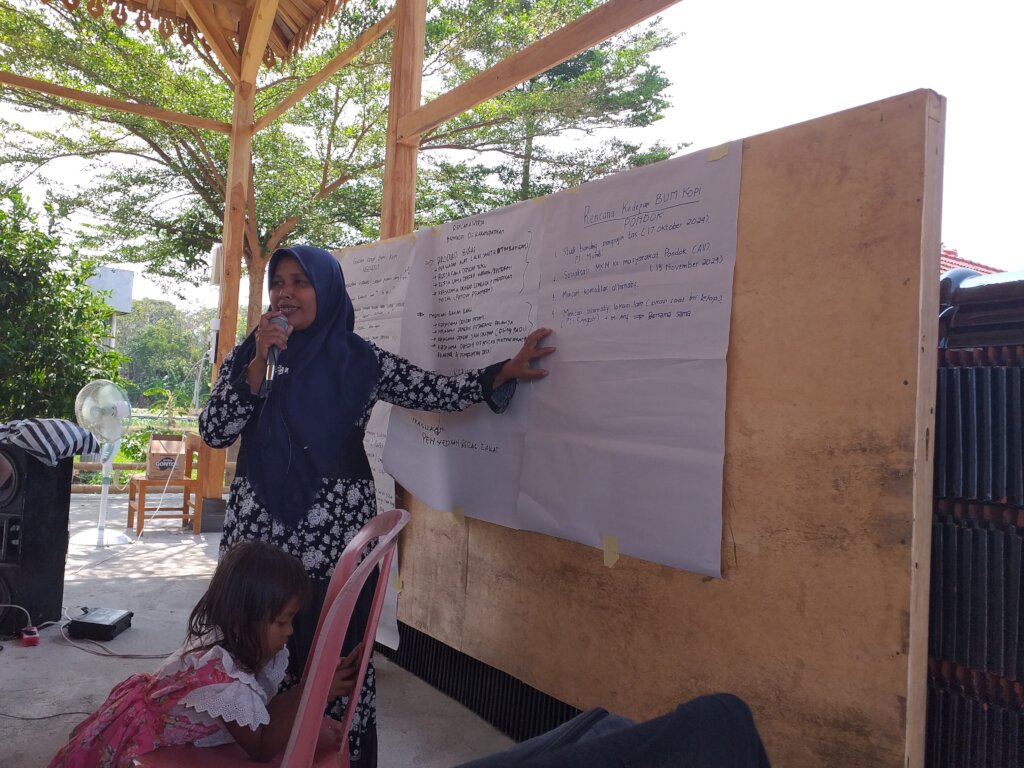
During the planning session, each KOPI outlined preliminary strategies for 2026. Key priorities included improving financial management, strengthening digital and offline marketing, increasing member engagement, and enhancing collaboration between KOPI across villages. Participants agreed that future business development must be more structured and realistic, grounded in local capacities and market conditions.
Challenges Identified
The discussion concluded that:
By Noviana | Project Staff
By Noviana | Project Staff
Project reports on GlobalGiving are posted directly to globalgiving.org by Project Leaders as they are completed, generally every 3-4 months. To protect the integrity of these documents, GlobalGiving does not alter them; therefore you may find some language or formatting issues.
If you donate to this project or have donated to this project, you can receive an email when this project posts a report. You can also subscribe for reports without donating.



Support this important cause by creating a personalized fundraising page.
Start a Fundraiser