![Coral Reef Health Influences design by L. Kustra]()
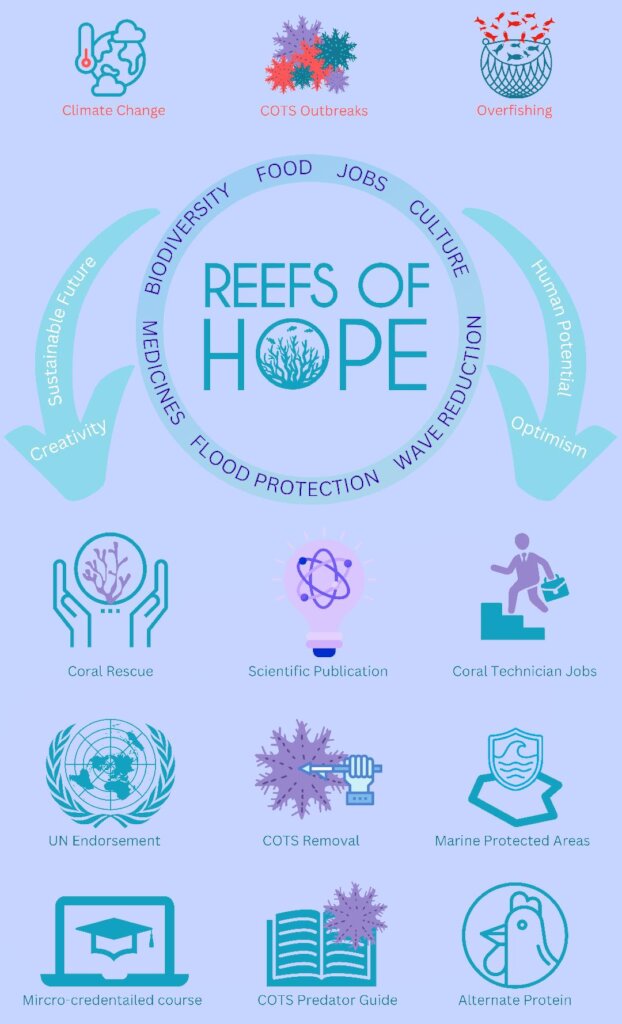
Coral Reef Health Influences design by L. Kustra
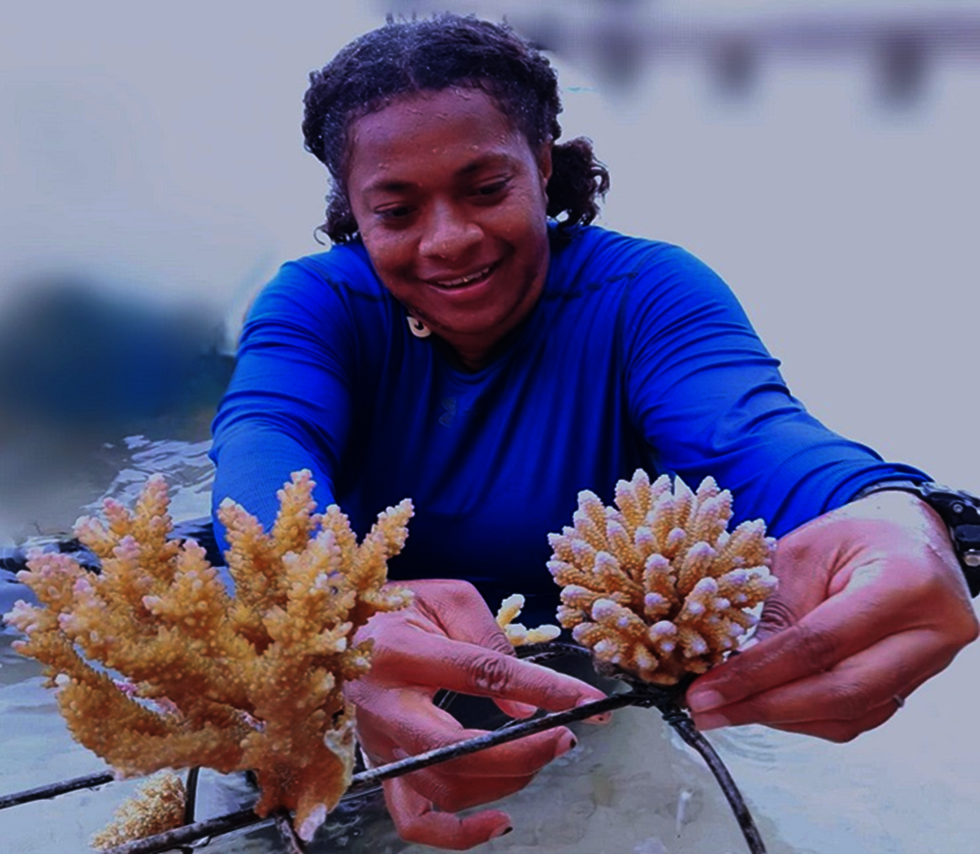
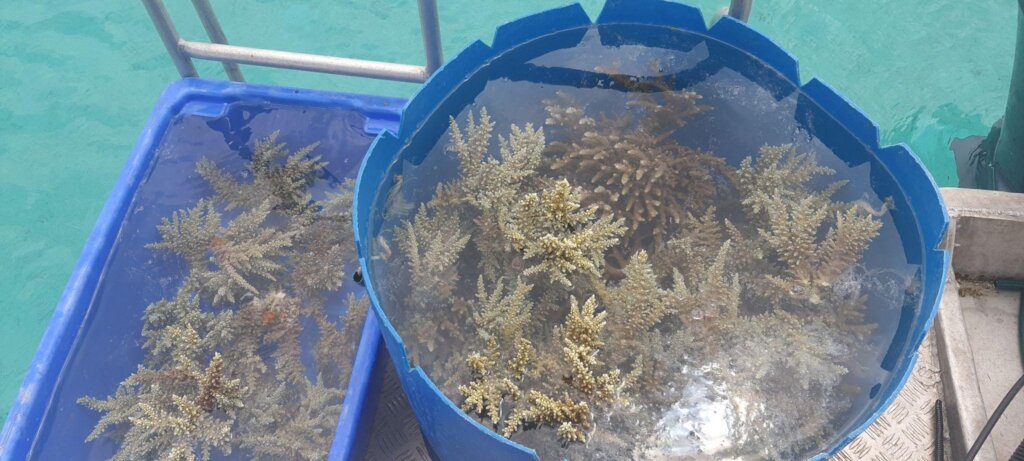
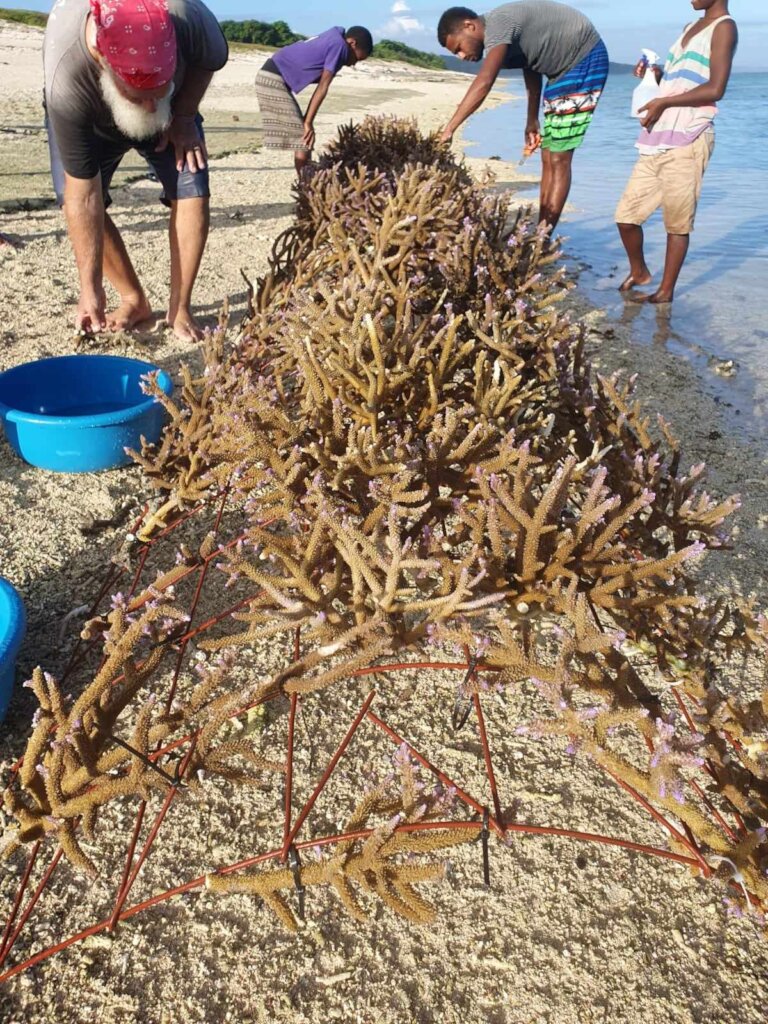
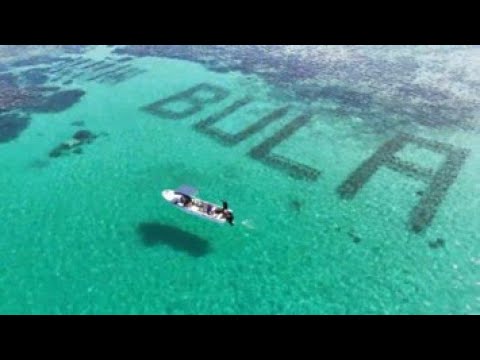
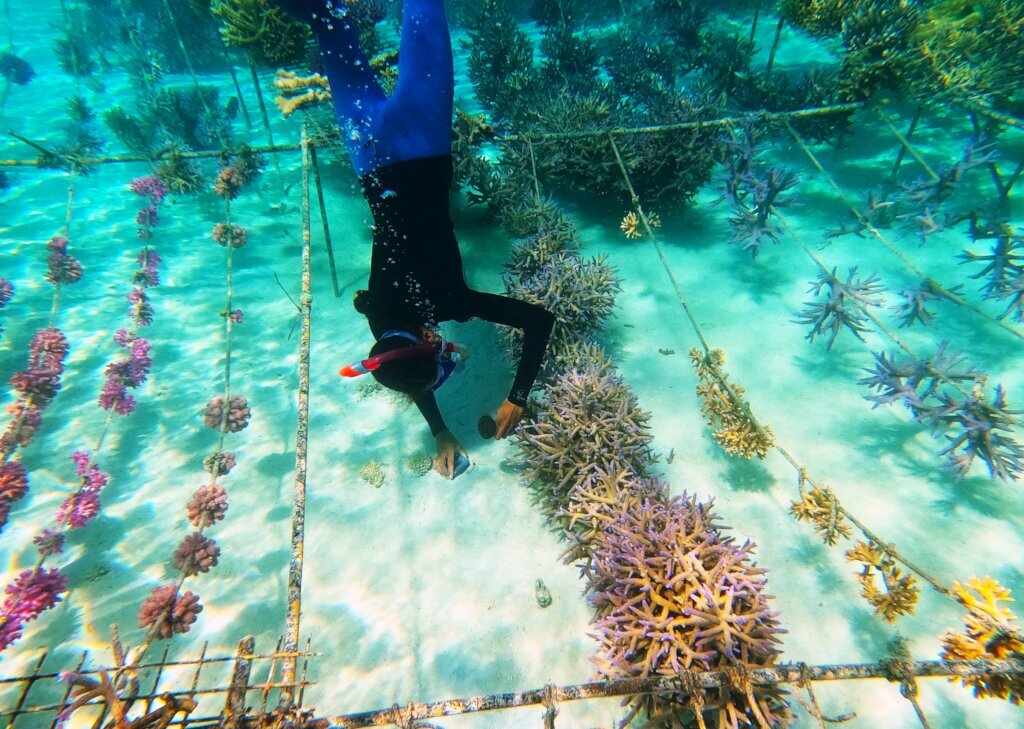
CORAL UPDATES: I just returned from the resort site where we removed >20 COTS. BULA Nursery looks fabulous. The water is cold now 21C=69.8F. I need to go to the Moturiki site next week. Then I will be in Tuvalu from 24th-30th of August to train the NGO there and Fisheries staff how to build the nurseries. I shipped a lot of materials that are now waiting. We will soon know if the corals we moved survived.
KEEPING VIGILANT TO REMOVE CROWN OF THORNS STARFISH:
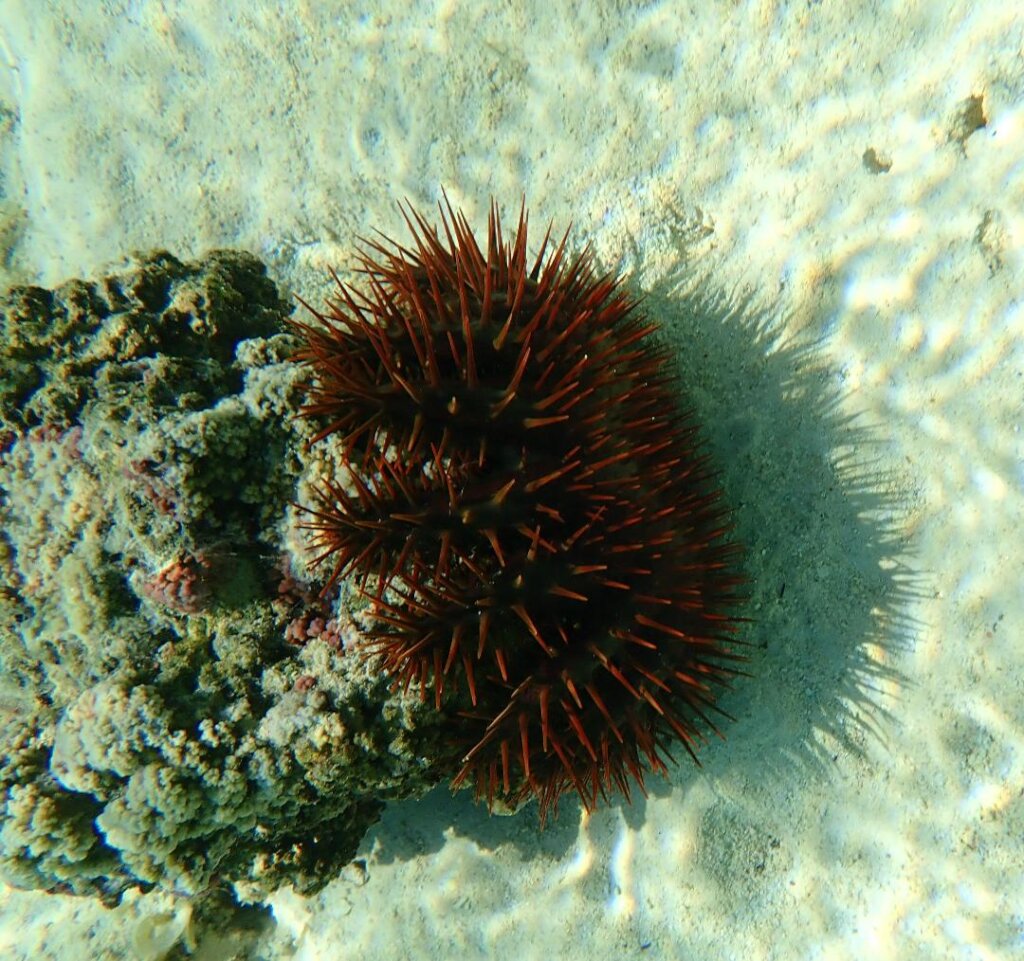
Crown of Thorns Starfish fight to gain the upper hand in the survival battle that is waged daily on the coral reefs. COTS are prolific breeders and the threat is real as their favorite food is one of the most precious corals, Acropora species. Over the decades that I have observed corals & their prey & protectors like Titan Triggerfish (Balistoides viridescens), I have seen this tableau of life on the shallow reefs unfold. This trend has been supported by others. "COTS can eat half their body weight per day, which translates into them consuming up to 10 square meters of coral a year." https://www.aims.gov.au/research-topics/marine-life/crown-thorns-starfish Accessed March 3, 2025.
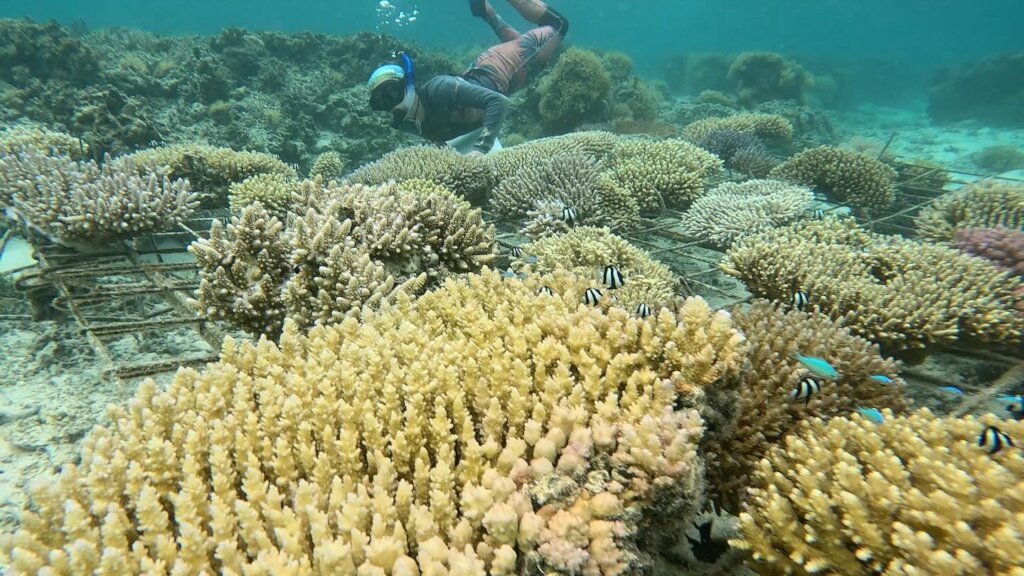
The COTS capitalize on corals weakened already by high ocean temperatures and pollution and a few can easily devour several square meters in a day. In a week, a single adult COTS can destroy an area of up to 70 square meters.The only answer is to fight back with all the manpower and techniques like raising nursery beds to make them inaccessible to bottom roamers like starfish.
Keeping vigilant regarding COTS overpopulation and expansion of territory is a necessity. For keeping the reef healthy means making the reef attractive to the natural fish predators of COTS. A passive approach does not work because the resulting ecological imbalance imperils coral reefs and prevents their adaptation and recovery from mass bleaching die-offs. Much of this science does not get quickly translated into usable form for educators. For instance, there is a new scientific modeling study indicating that fully 50% of the corals of Australia's Great Barrier Reef would not exist if it were not for the culling program there. That probably translates to something like greater than 70% of Acropora, as that is their favorite food hands down. Our reefs here are transitioning to Porites and Pocillopora. Fiji and the rest of the South Pacific have no systematic COTS removal going on, with the exception of a few resorts. Our team removes around 1.5K per year, but COTS continue to devour the Malolo site especially. That is why the elevated nurseries are so important, as COTS can not access the secured heat-adapted corals. We have lost some of our best frames and our beloved "bicycle ball," made of old wheels and planted with corals that was so amazing until 5-10 COTS succeeded in devouring it when we were not watching. Update: this week our German volunteer who has been working for us for several months, not only helped destroy 20 COTS, but he also restored living corals on the "bicycle ball."
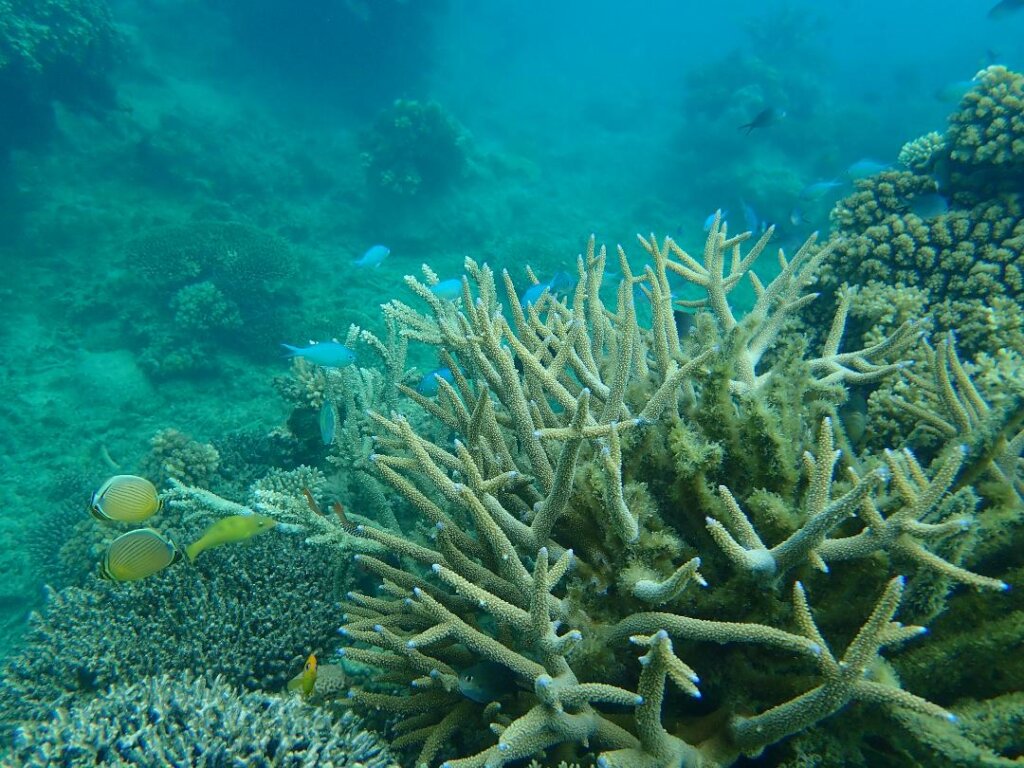
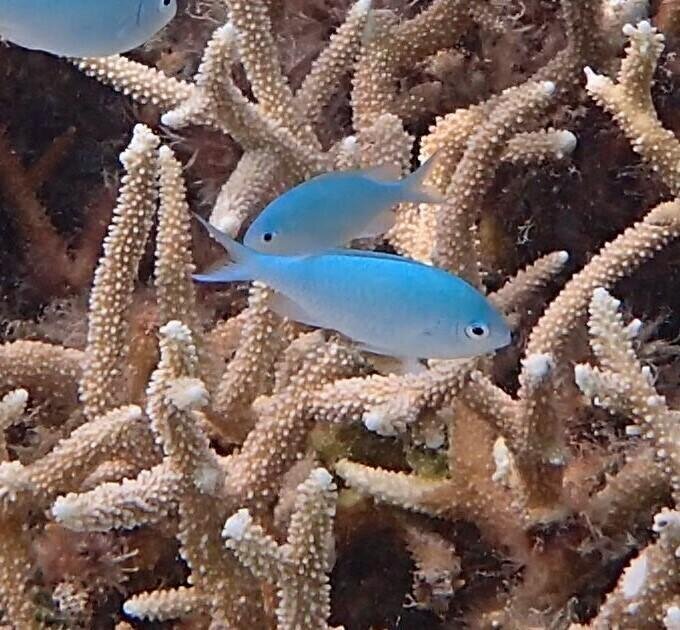
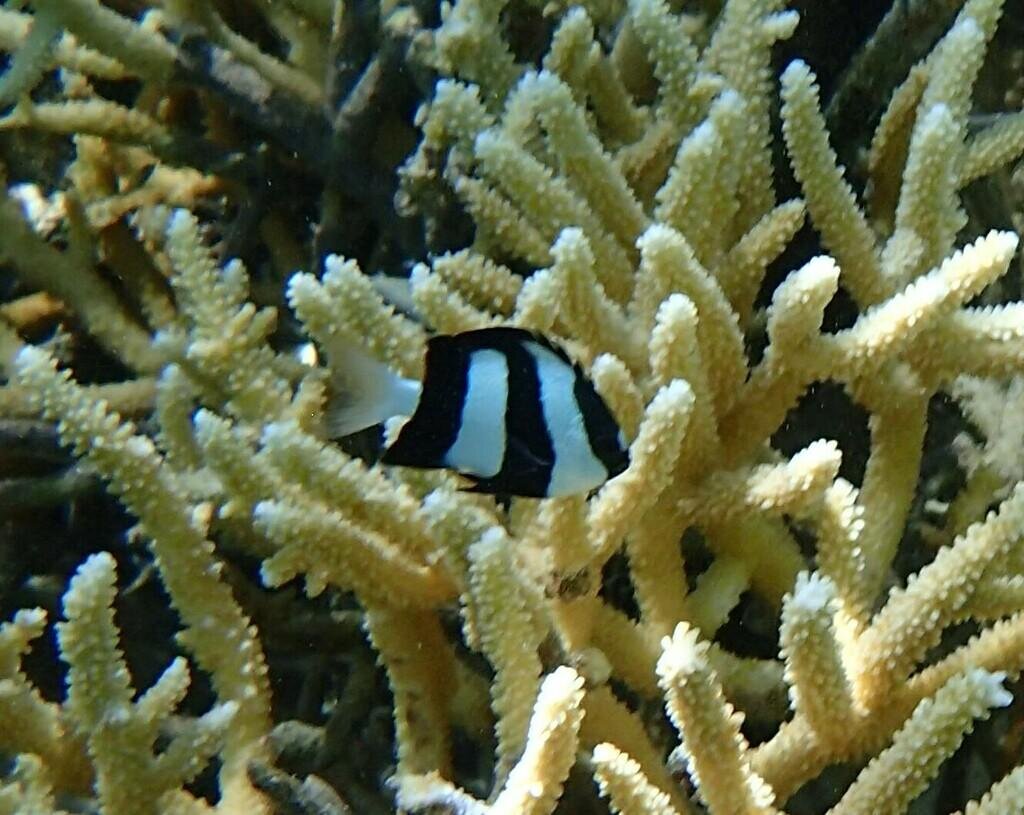
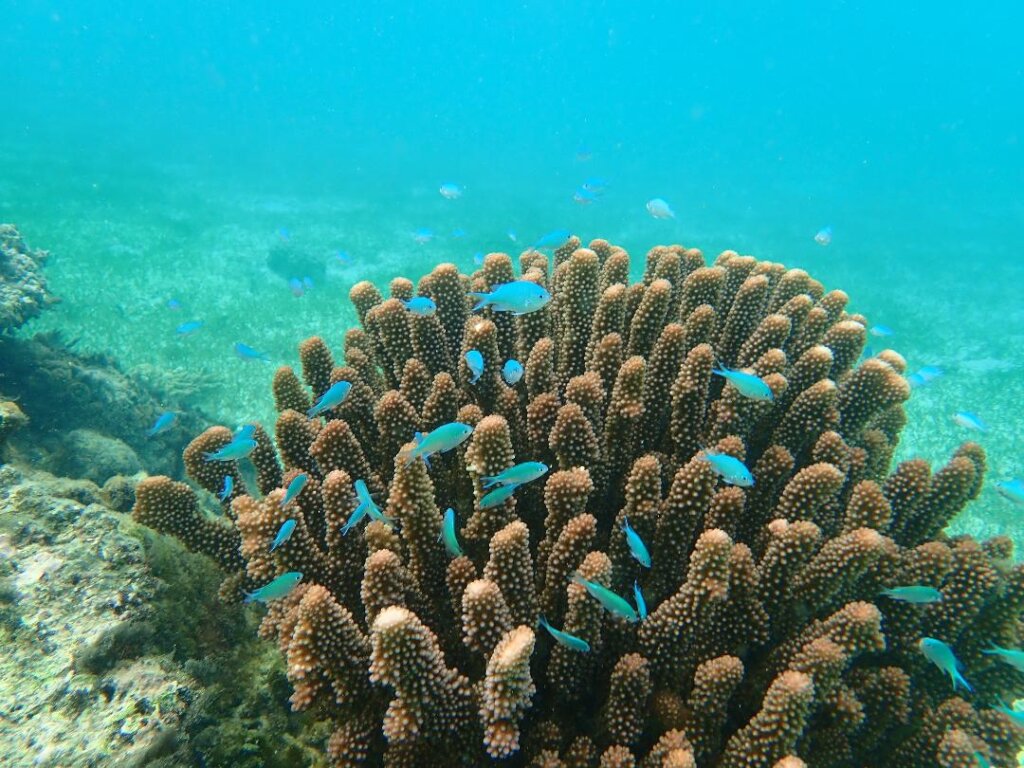
Myself, plus Gail, our Corals for Conservation's Curriculum expert, and outside contributing editors with knowledge and photographs of helpful natural fish predators, are currently discussing ways to pool our expertise and produce a handbook to identify and assess prey/predator balance in each coral system. In many cases, common names of species, example Moon Corals would be highlighted to help indigenous communities easily identify and record. Coastal people could also be on the lookout for the little blue and green Chromis, as well as the black and white humbugs which apparently are major predators of COTS larvae!
In conjunction with the broader plan, gaining support across the Atlantic/ Pacific divide and including land-locked and northern countries, our Canadian friend Leona Kustra has done some explanatory graphics. These are helpful as speaking points when conveying the message of inter-connectiveness of systems and the many fanning out points of coral system influences.
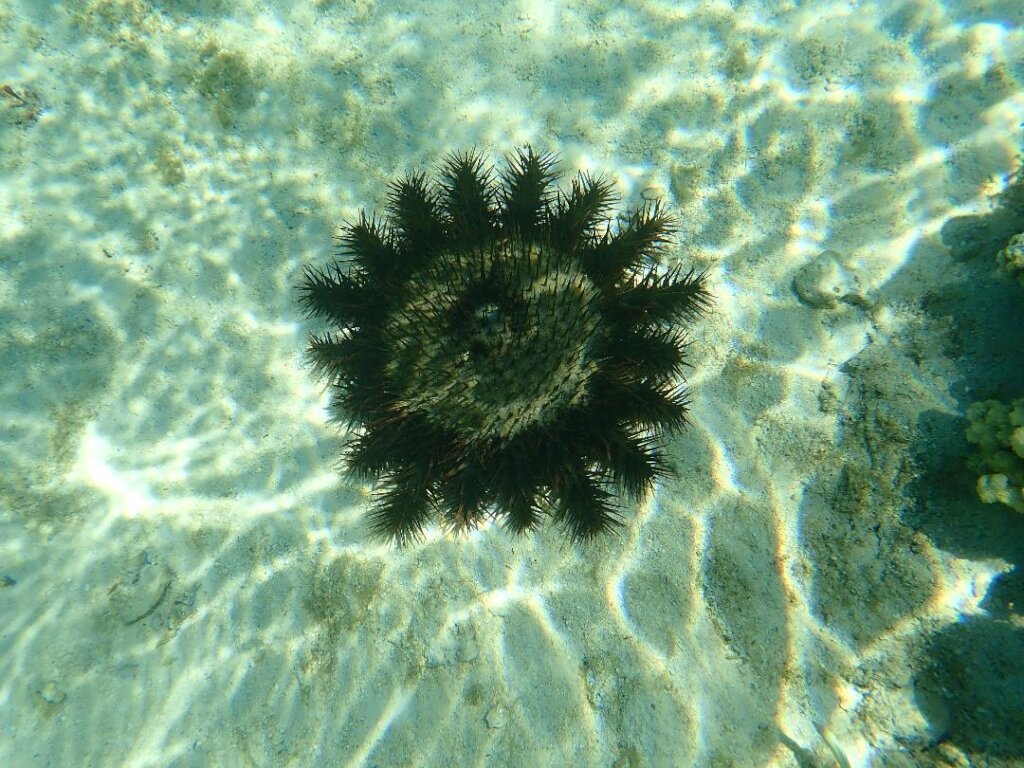
One part of the web of coral reefs is that corals can be weakened considerably by high temperatures and agricultural run-off. That's when Crown of Thorns multi-armed starfish take advantage. Ideally, the preditors of COTS also arrive to deplete the numbers. In my observations, most COTS predators only pick at them or eat an arm or two. I believe that the main predators of COTS adults--the ones that kill them--are Humphead Wrasses, Titan Triggerfish and Triton Trumpet snails. I suspect that nurse sharks might also eat them. When we find isolated COTS, we smash them in the water and many fish come to eat them. Culling COTS is tricky because of their ability to regenerate arms--in other words fight back.
We need to make our sites shine, which is very challenging in the present marine heat waves which cause coral bleaching and death as well as disease outbreaks- also related to warming oceans. On top of this we get COTS outbreaks and harmful algae blooms which are both related to land-based pollution entering the ocean.
Thank you donors for keeping hope alive on our South Pacific reefs,
Austin
![Crown of Thorns Starfish gobbling coral--L. Kustra]()
Crown of Thorns Starfish gobbling coral--L. Kustra
![COTS on roaming in coral bed]()
COTS on roaming in coral bed
![Snorkler tending coral nursery]()
Snorkler tending coral nursery
![Share on Twitter]()
![Share on Facebook]()